

Quick Answer: How Can a Foreigner Legally Drive in Vietnam?
To drive legally in Vietnam, a foreigner must hold a valid Vietnamese driver's license for the specific vehicle category, or qualify to convert an eligible foreign license, or carry an International Driving Permit that meets Vietnam's current recognition requirements together with the corresponding valid national license. Vietnam's electronic identity account (eID/VNeID) does not, by itself, authorize anyone to drive a car, motorcycle, or scooter. A passport, visa, residence card, vehicle registration, or rental contract is also not a substitute for the required driving authorization.
Driving in Vietnam as a foreigner can be one of the most practical and enjoyable ways to explore the country, but it comes with specific legal requirements that have changed significantly in 2025 and 2026. This guide explains how foreigners can legally drive cars, motorcycles, and scooters in Vietnam; how to obtain a Vietnamese driver's license; how to convert an eligible foreign license; how International Driving Permits work; and why Vietnam's electronic identity system (eID/VNeID) is not, by itself, a driver's license.
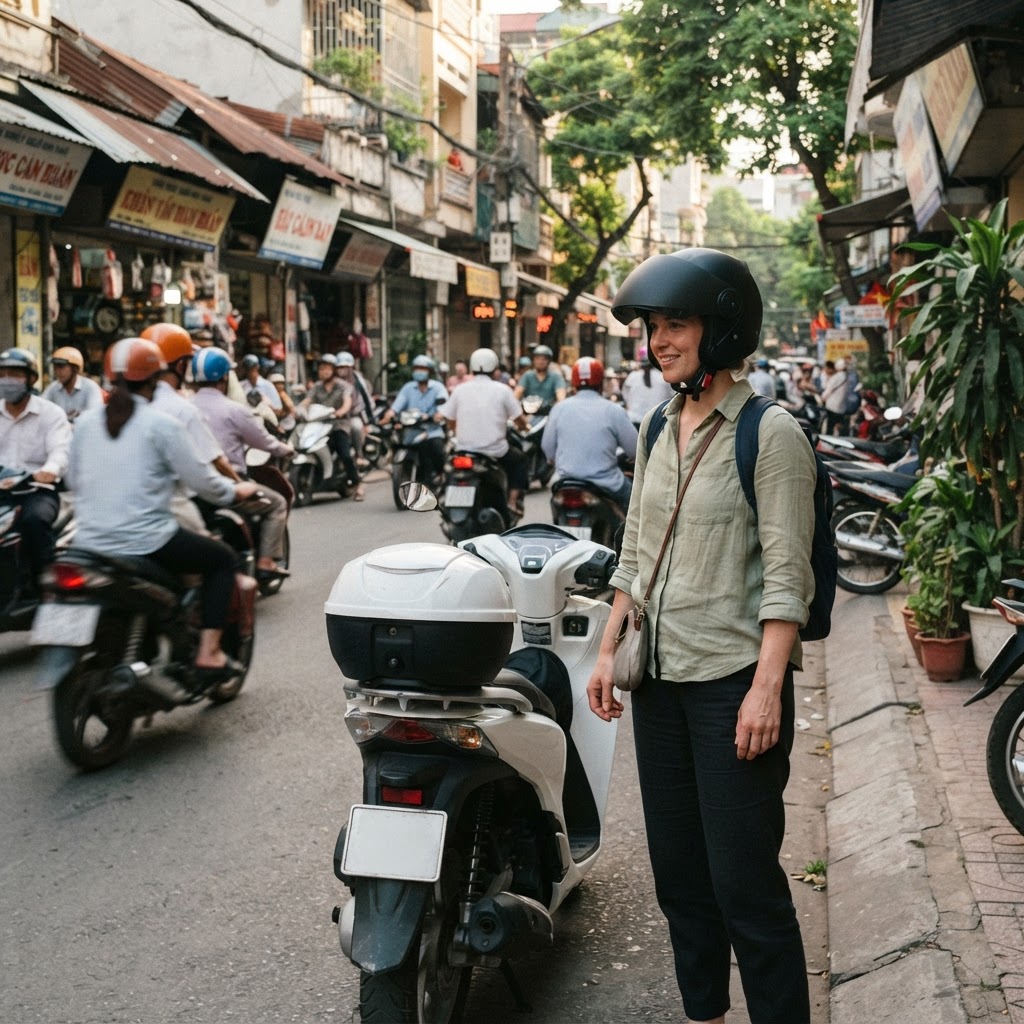
Critical: eID Is Not a Driver's License
A Vietnamese electronic identity account does not, by itself, authorize a foreigner to drive a car, motorcycle, or scooter in Vietnam. Vietnam's eID system, including VNeID, supports electronic identification and access to eligible digital documents. Having an eID account is not the same as holding a valid driver's license or qualifying international driving documents.
A foreign driver must have the driving authorization required under current Vietnamese law for the specific vehicle being operated. An eID account can help establish your identity, but an identity account alone does not grant driving privileges.
It is essential to understand the difference between these documents:
| Document | What It Does | What It Does Not Do |
|---|---|---|
| Passport | Establishes identity and travel documentation | Does not authorize driving |
| Visa or residence document | Establishes immigration or residence status | Does not authorize driving |
| Vietnamese electronic identity account (eID/VNeID) | Supports electronic identity verification and access to eligible digital services and documents | Does not automatically grant permission to drive |
| Vietnamese driver's license | Authorizes the holder to operate the vehicle categories covered by the license, subject to its validity and applicable law | Does not authorize vehicle categories outside those listed on the license |
| Foreign national driver's license | May support lawful driving in Vietnam only when applicable recognition requirements are satisfied, or may qualify for conversion | Is not automatically valid in Vietnam without meeting recognition or conversion requirements |
| International Driving Permit (IDP) | An international driving document that must meet Vietnam's recognition requirements and generally be presented with the corresponding valid national driver's license | Does not replace a national driver's license and is not automatically accepted in Vietnam |
Do not assume that a passport, visa, residence card, eID account, vehicle registration, or rental contract substitutes for the required driving authorization. Each document serves a different legal purpose.
Vietnam's 2026 Driving License and eID Rules: What Expats Need to Know
Vietnam's driving license and electronic identification framework has undergone significant changes in 2025 and 2026. Two key legal instruments affect foreigners who want to drive legally in Vietnam.
Circular 108/2026/TT-BCA: New Driving License Rules
The Ministry of Public Security (Bộ Công an) issued Circular 108/2026/TT-BCA on June 29, 2026, with an effective date of July 1, 2026. This circular regulates the testing, issuance, and use of driver's licenses, as well as the issuance and use of International Driving Permits in Vietnam.
Key Facts About Circular 108/2026/TT-BCA
Issuing authority: Ministry of Public Security (Bộ Công an)
Issued: June 29, 2026
Effective: July 1, 2026
Scope: Regulations on testing, issuance of driver's licenses; issuance and use of International Driving Permits
Official source: Vietnam Government Portal — Circular 108/2026/TT-BCA
This circular is the current primary legal framework for driver licensing in Vietnam. It replaces or supersedes older procedures, including those previously governed by Circular 12/2025/TT-BCA. Foreigners who relied on older expat guides or older procedural instructions should verify that their information reflects the current 2026 rules.
Do not rely exclusively on older expat guides or older procedural instructions. Circular 108/2026/TT-BCA is the current framework. If you are unsure whether a procedure you read about still applies, confirm with the competent licensing authority or an authorized driving school before proceeding.
Decree 320/2026/NĐ-CP: Electronic Identification Changes
The government issued Decree 320/2026/NĐ-CP on August 13, 2026, amending and supplementing Decree 69/2024/NĐ-CP on electronic identification and authentication. This decree expands access to electronic identity accounts for eligible foreigners.
Key Facts About Decree 320/2026/NĐ-CP
Issued: August 13, 2026
Amends: Decree 69/2024/NĐ-CP on electronic identification and authentication
Key change for foreigners: Foreigners who legally enter or legally reside in Vietnam may be granted an electronic identity account, subject to applicable eligibility and verification requirements
Official source: Vietnam Government — New Regulations on Electronic Identification
Under the amended Article 7, foreigners who legally enter Vietnam (nhập cảnh hợp pháp) or legally reside in Vietnam (cư trú hợp pháp tại Việt Nam) may be granted an electronic identity account when they have a need for one. The decree also lists 66 types of individual documents that may be integrated into the national electronic identity application (VNeID), including driver's licenses (giấy phép lái xe).
However, the decree establishes an important principle: when a document has already been integrated into VNeID, agencies and organizations are not permitted to require the individual to submit the paper original or a copy. This streamlines administrative procedures, but it does not change the underlying legal requirement to hold a valid driver's license.
The Critical Distinction: eID Identifies, It Does Not Authorize Driving
An eID account identifies or verifies a person; it does not automatically grant permission to drive.
Displaying an electronic document and possessing a valid driving entitlement are related but distinct matters. A driver's license may appear in VNeID as an integrated electronic document, but the underlying license must be valid and must cover the vehicle the person intends to operate. If you do not hold a valid driver's license, having an eID account does not create one.
Do not assume that every foreigner automatically qualifies for an eID account, or that every foreign driving license will automatically appear in VNeID. Eligibility depends on your immigration status, the applicable verification requirements, and whether the issuing authority's database is connected to the electronic identification system.
Avoiding Outdated Legal Information
Older procedures under Circular 12/2025/TT-BCA may no longer reflect the complete current procedure following the 2026 changes. Always compare older instructions with the current rules under Circular 108/2026/TT-BCA. If the complete current law or an amendment cannot be verified, identify the uncertainty clearly and contact the appropriate official authority.
Never rely on a legal requirement, exemption, fee, penalty, or processing time that you cannot verify against an official source. This article identifies where information requires further verification and provides the appropriate official sources.
Vietnamese Driver's License Categories
Vietnam's driver's license system uses specific vehicle categories. The category on your license determines which vehicles you are legally authorized to operate. A license for a smaller motorcycle does not automatically authorize a larger motorcycle, and a car license does not automatically authorize motorcycle riding.
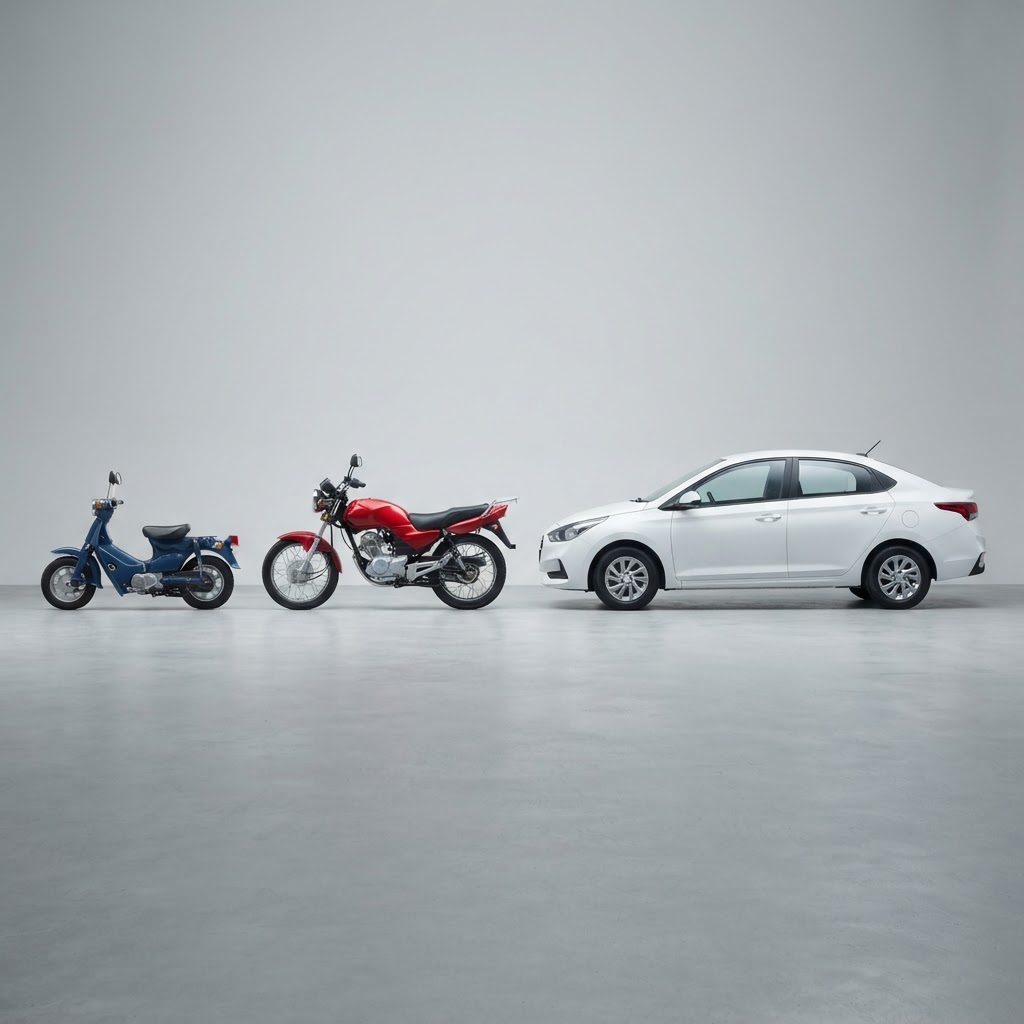
| Category | General Authorization |
|---|---|
| A1 | Two-wheeled motorcycles with an engine displacement of up to 125 cc, or electric motors with power up to 11 kW |
| A | Two-wheeled motorcycles above 125 cc, or electric motors above 11 kW, plus the applicable A1 vehicles |
| B1 | Three-wheeled motorcycles and the applicable A1 vehicles, subject to the statutory classification |
| B | Cars carrying up to eight passengers excluding the driver, plus certain other vehicles within the applicable statutory limits |
These are simplified descriptions and are not a substitute for the full statutory vehicle classifications. Confirm the current classifications against the official legislation before applying for any license.
Minimum Age Requirements
The general minimum age requirement for A1, A, and B licenses is 18 years old, subject to the current regulations. Verify the current minimum age for each category against the official legislation, as age requirements may vary depending on the category and any recent amendments.
Why the Category Matters
A license covering a smaller motorcycle does not automatically authorize a larger motorcycle. For example, an A1 license (up to 125 cc) does not authorize you to ride a 150 cc motorcycle, which falls under category A. Similarly, a car license (category B) does not automatically authorize motorcycle riding. You must hold the specific category that covers the vehicle you intend to operate.
If any category or vehicle threshold has changed, use the current official classification rather than relying on an outdated description. The categories above reflect the current system that replaced the pre-2025 classification (where A1 was described as "under 175 cc" and A2 as "175 cc and above"). Those older descriptions no longer apply.
How Foreigners Can Obtain a Vietnamese Driver's License
If you do not have a foreign driver's license that qualifies for conversion, or if you need a category not covered by your existing license, you can apply for a Vietnamese driver's license from scratch. The process involves several steps.
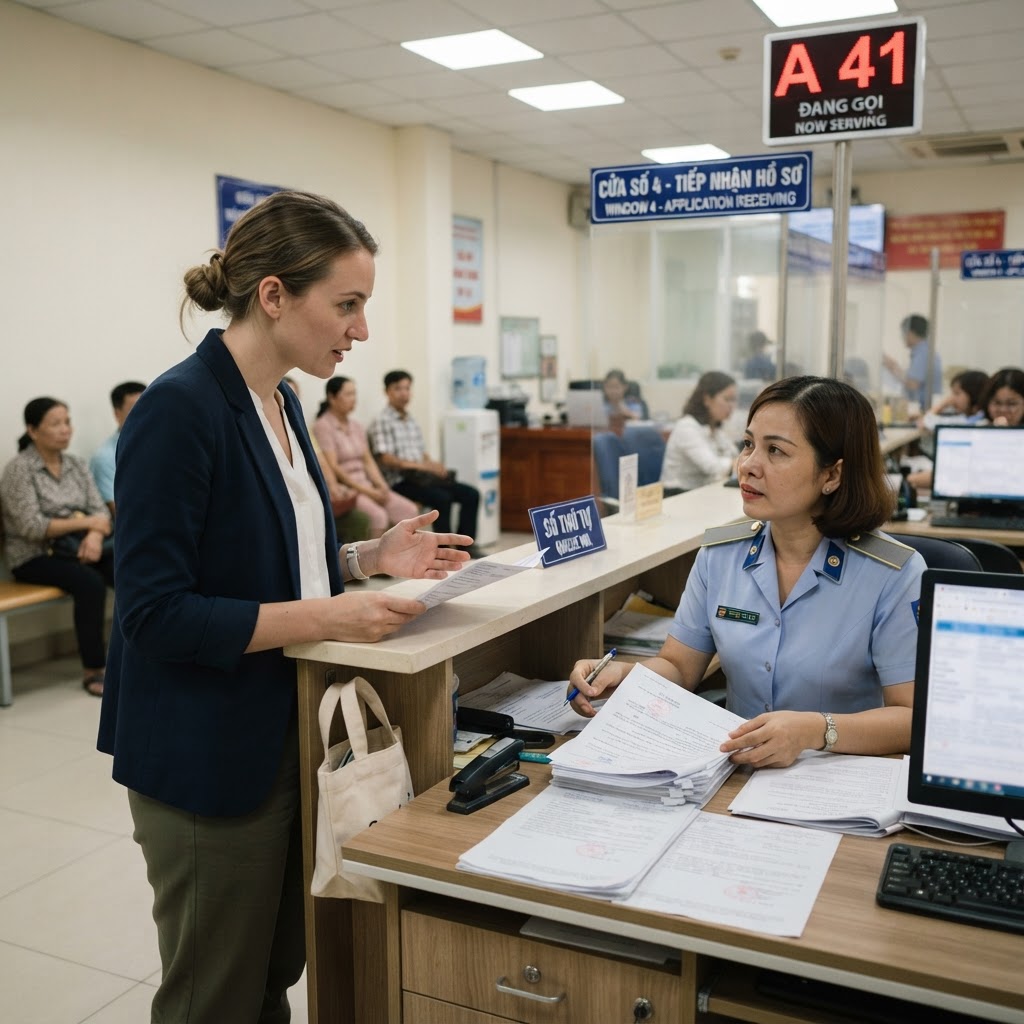
Step-by-Step Guide
- Determine the vehicle category required for the car, motorcycle, or other vehicle you intend to drive. Match the vehicle's engine displacement or electric motor power to the correct category (A1, A, B1, or B).
- Check the applicant's minimum age and eligibility. The general minimum age is 18 for A1, A, and B licenses, subject to current regulations.
- Confirm the current residence, immigration, and identity-document requirements. Requirements may vary depending on whether you hold a temporary residence card, a visa, or other immigration documentation.
- Contact the competent local licensing authority or an authorized driving school. In Vietnam, driver's licenses are typically handled by the Traffic Police Department (Phòng Cảnh sát giao thông) under the Ministry of Public Security, or through authorized driving schools.
- Obtain the current application checklist. Do not rely on older checklists from expat forums or blogs. Ask the licensing authority or driving school for the current list of required documents.
- Complete required training. Training requirements depend on the category and whether you already have driving experience. Do not assume that previous driving experience in another country exempts you from training.
- Complete the theory examination and practical driving examination where applicable. The theory exam covers traffic laws, road signs, and safe driving practices. The practical exam tests your ability to operate the vehicle safely.
- Complete any required medical examination. A medical certificate may be required to confirm you meet the health standards for driving.
- Pay the applicable official fees. Fees vary by category and are set by the current regulations. Confirm the current fee schedule with the licensing authority.
- Receive the license and check the personal information, category, and validity period. Verify that all details are correct before leaving the licensing office.
Do not assume that previous driving experience in another country allows you to bypass training or testing. Vietnam's licensing requirements are set by law, and the exact requirements may vary depending on the applicant's status, the license category, and the current regulations. A first-time applicant and someone who already has a valid foreign license that may qualify for conversion follow different procedures.
Document Preparation Checklist
The following documents are commonly required, but always confirm which documents are mandatory under current rules and which may only be needed in specific cases:
- Valid passport
- Valid visa or residence documentation (temporary residence card, etc.)
- Application form (current prescribed form)
- Photographs (confirm current specifications with the licensing authority)
- Medical certificate (where required)
- Proof of training completion (where applicable)
- Examination results (where applicable)
- Payment of applicable official fees
Some documents may only be required in specific cases. Confirm the current checklist with the competent licensing authority before applying.
Can You Convert Your Foreign Driver's License to a Vietnamese License?
If you already hold a valid foreign driver's license, you may be able to convert it to a Vietnamese license without completing the full training and testing process. Conversion eligibility depends on the current Vietnamese regulations, the validity and verifiability of the foreign license, the applicant's immigration or residence documentation, and the categories involved.

Conversion Requirements Under Circular 108/2026/TT-BCA
Under the currently applicable administrative procedure, the conversion process typically involves:
- The prescribed application form — completed and signed according to the current format.
- The original foreign driver's license — presented for verification. The license must be valid and verifiable.
- Passport and applicable immigration or residence documents — to establish identity and lawful status in Vietnam.
- A certified or otherwise properly prepared Vietnamese translation of the foreign driver's license, where required.
- Authentication or verification requirements — where applicable, the foreign license may need to be authenticated or verified through the appropriate channels.
- Medical documentation — where required by the current regulations.
- Submission to the competent licensing authority — typically the Traffic Police Department or the relevant authority designated under the current procedure.
- Photographs, verification, fees, and license collection — the applicant must complete all administrative steps and collect the converted license.
Expired, altered, damaged, unverifiable, or otherwise ineligible licenses may not qualify for conversion. A converted Vietnamese license is limited by the applicable vehicle categories and validity rules. Conversion does not grant additional vehicle privileges beyond those legally authorized by the original foreign license and the Vietnamese regulations.
Fee and Processing Time
The Vietnamese National Public Service Portal has published a foreign driver's license conversion procedure that states:
Previously Published Conversion Procedure
Processing period: Five working days after receipt of a complete and valid application
Stated fee: VND 135,000
Official procedure reference: Vietnam National Public Service Portal — Foreign Driver's License Conversion
These figures were previously published by the National Public Service Portal. Before relying on them, verify that the procedure, fee, and processing time remain applicable under the current 2026 regulations, including Circular 108/2026/TT-BCA. If the newer rules have changed either figure, use the current verified information. If the figures cannot be confirmed against the current regulations, treat them as previously published figures that require confirmation rather than as current guarantees.
The stated processing period begins after a complete, valid application has been received, rather than necessarily beginning when an applicant first contacts an office. Incomplete applications or applications requiring additional verification may take longer.
Separate the official licensing fee from potential additional expenses. The official fee covers the licensing procedure itself. You may also need to pay for:
- Translations of your foreign driver's license
- Authentication or notarization of documents
- Medical examinations
- Training (if required for categories not covered by your foreign license)
- Transportation to and from the licensing office
- Document preparation or assistance services
Can You Drive in Vietnam With an International Driving Permit?
An International Driving Permit (IDP) is a document that translates and accompanies your national driver's license. It is not a standalone license. Whether an IDP is valid in Vietnam depends on the issuing country, the type of IDP, and Vietnam's current recognition rules.
National License vs. IDP vs. Vietnamese License
| Document | What It Is | Validity in Vietnam |
|---|---|---|
| National driver's license | A license issued by a national authority authorizing the holder to drive specific vehicle categories | Not automatically valid; may qualify for conversion or may be recognized when accompanied by a qualifying IDP |
| International Driving Permit | An international document that translates a national license and must be carried with it | Must meet Vietnam's recognition requirements; not all IDPs are accepted |
| Vietnamese driver's license | A license issued under Vietnamese law authorizing the holder to drive specific vehicle categories | Valid for the categories and validity period stated on the license |
Vietnam and the 1968 Vienna Convention
Vietnam acceded to the 1968 Vienna Convention on Road Traffic in 2015. Under this convention, contracting parties may recognize International Driving Permits issued by other contracting parties, when presented together with the corresponding valid national driver's license.
However, not all countries issue IDPs under the 1968 Vienna Convention. The United States, United Kingdom, Canada, and Australia are parties to the 1949 Geneva Convention, not the 1968 Vienna Convention. IDPs issued under the 1949 Geneva Convention may not be recognized in Vietnam, which is a party to the 1968 Vienna Convention.
The U.S. Embassy in Vietnam advises that foreign driver licenses, even when accompanied by an International Driving Permit, are not valid in Vietnam. This reflects the fact that the United States is not a party to the 1968 Vienna Convention on Road Traffic. If your country is not a contracting party to the 1968 Vienna Convention, your IDP may not be recognized in Vietnam.
Do not assume that a driver's license from the United States, United Kingdom, Canada, Australia, or another country is automatically accepted in Vietnam. Verify whether your country is a contracting party to the 1968 Vienna Convention and whether your IDP meets Vietnam's current recognition requirements.
Key Rules About International Driving Permits in Vietnam
- The issuing country and type of IDP matter. Vietnam is a party to the 1968 Vienna Convention. IDPs issued under the 1949 Geneva Convention by non-contracting parties may not be recognized.
- An IDP generally must be accompanied by the corresponding valid national driver's license. An IDP alone is not a substitute for a national license.
- The vehicle category must match the vehicle being driven. An IDP that covers only car categories does not authorize motorcycle riding, and vice versa.
- A car license does not automatically authorize motorcycle riding. Even with a valid IDP, you can only drive the vehicle categories covered by your underlying national license.
- Unofficial international driving documents and simple translations may not satisfy legal requirements. Only official IDPs issued by authorized bodies in contracting parties to the 1968 Vienna Convention may be recognized.
- Visitors and longer-term residents should confirm the rules that apply to their individual circumstances, as recognition may depend on nationality, length of stay, and the current regulations.
Circular 108/2026/TT-BCA addresses the issuance and use of International Driving Permits in Vietnam. Review the current circular and any subsequent amendments to confirm the applicable recognition rules.
Motorbikes, Scooters, and Rental Companies
Many foreigners rent or purchase motorbikes and scooters in Vietnam. Understanding the legal requirements is essential, because a rental shop handing over a vehicle does not establish that you are legally authorized to ride it.
Vehicle Classification: Mopeds, Scooters, and Motorcycles
The legal distinction between mopeds, scooters, and motorcycles in Vietnam depends on engine displacement and electric motor power:
| Vehicle Type | Engine / Power | Likely License Category |
|---|---|---|
| Small scooter (e.g., 50 cc) | Up to 50 cc | Confirm current requirements — some very low-displacement vehicles may have different rules, but do not assume no license is needed without verifying |
| Standard scooter (e.g., 110 cc, 125 cc) | Up to 125 cc or 11 kW electric | A1 |
| Larger motorcycle (e.g., 150 cc, 300 cc) | Above 125 cc or above 11 kW electric | A |
| Car | Passenger vehicle up to 8 passengers | B |
Engine displacement and electric motor power determine the vehicle classification. Always verify the current statutory classifications, as thresholds may change.
A rental shop handing over a vehicle does not establish that you are legally authorized to ride it. A rental agreement is not a substitute for a valid driving license. The renter must verify the license category required for the actual vehicle. If your license does not cover the vehicle, the rental company is not authorized to override that legal requirement.
Matching Your License to the Vehicle
- A license for a smaller motorcycle may not authorize a larger motorcycle. An A1 license (up to 125 cc) does not cover a 150 cc motorcycle, which requires category A.
- A foreign car license does not automatically authorize motorcycle riding. If your foreign license covers only cars, you may not be authorized to ride a motorbike in Vietnam, even if your license is otherwise recognized.
- Always verify the license category required for the actual vehicle you intend to rent or purchase, not just the general type.
Helmets, Registration, and Insurance
In addition to a valid driver's license, the following requirements apply:
- Helmet: All motorcycle and scooter riders and passengers must wear a compliant helmet that is properly fastened. This is mandatory under Vietnamese law.
- Vehicle registration: The vehicle must have valid registration. If you rent, confirm that the rental company provides valid registration documents.
- Compulsory motor vehicle liability insurance: Motor vehicles in Vietnam are required to have compulsory liability insurance. Confirm that the vehicle is covered.
Insurance consequences depend on the applicable law, policy wording, and accident circumstances. Do not assume that every insurance policy automatically becomes void if a driver lacks the correct license, but also do not assume that your policy will cover you if you are driving without the required authorization. Review your policy wording and confirm coverage with your insurer.
Penalties, Fines, and Accident Liability
Driving without the required license or operating a vehicle outside the authorized category carries significant penalties under Vietnamese law. Since January 1, 2025, Vietnam has enforced Decree 168/2024/NĐ-CP, which substantially increased traffic fines compared to the previous Decree 100.
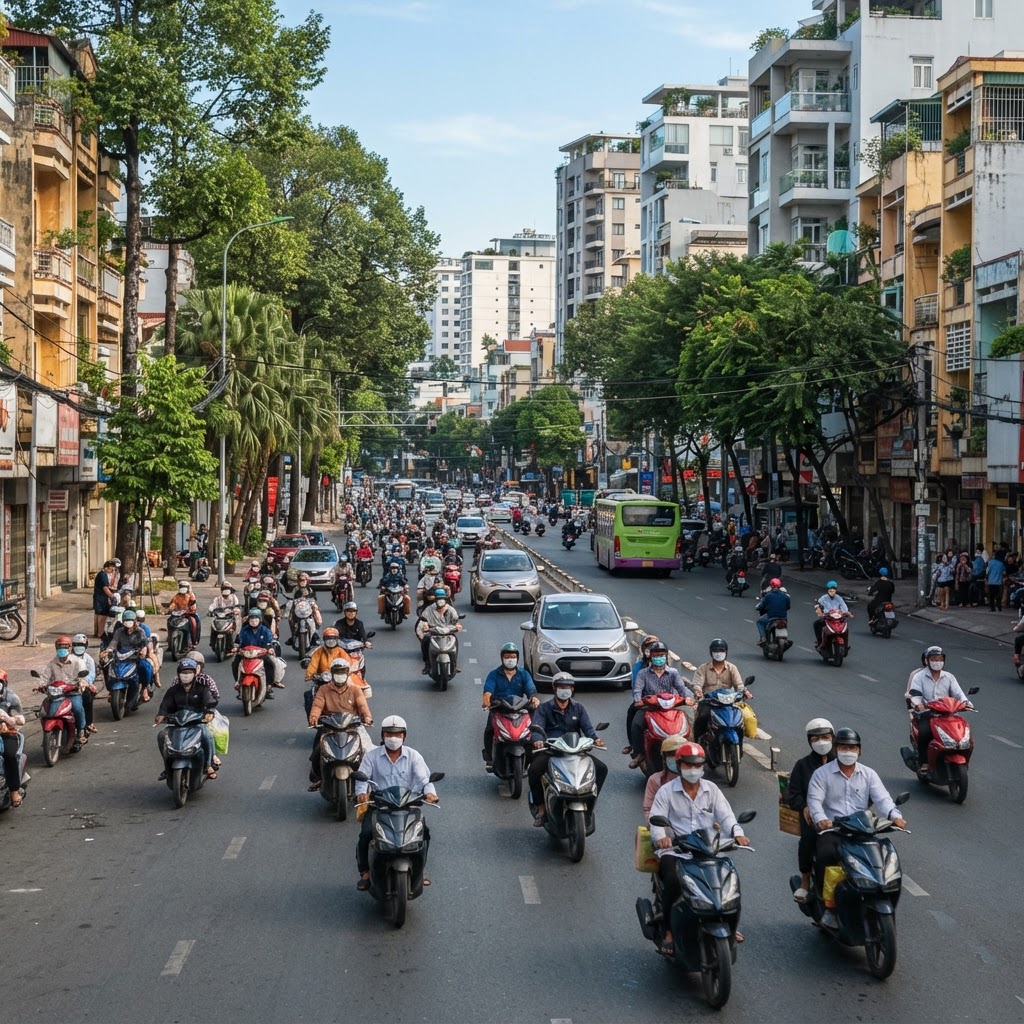
Penalties for Driving Without a Valid License
| Violation | Vehicle Type | Current Penalty (VND) | Other Consequences | Source |
|---|---|---|---|---|
| Driving without a valid license | Motorcycle up to 125 cc | 2,000,000 – 4,000,000 | Vehicle impounded for up to 7 days; storage fees of 350,000 – 700,000 VND may apply | Decree 168/2024/NĐ-CP |
| Driving without a valid license | Motorcycle over 125 cc | 6,000,000 – 8,000,000 | Vehicle impounded for up to 7 days; storage fees of 350,000 – 700,000 VND may apply | Decree 168/2024/NĐ-CP |
| Driving without a valid license | Car (automobile) | Significantly higher than motorcycle fines — verify the current exact amount against the official decree | Vehicle impounded; potential license suspension; additional administrative measures | Decree 168/2024/NĐ-CP |
| Driving outside the authorized category | Any vehicle | Penalties vary by vehicle type and category mismatch — verify against the current decree | Vehicle may be impounded; insurance complications may arise | Decree 168/2024/NĐ-CP |
| Driving under the influence of alcohol | Motorcycle | Up to 8,000,000 – 10,000,000 VND (highest BAC level) | License suspension for 22–24 months | Decree 168/2024/NĐ-CP |
| Driving under the influence of alcohol | Car | 6,000,000 – 8,000,000 VND (BAC ≤ 50 mg/100 ml blood) | License suspension; higher penalties for higher BAC levels | Decree 168/2024/NĐ-CP |
The fines listed above are based on Decree 168/2024/NĐ-CP, which took effect on January 1, 2025. Always verify the current penalty amounts against the official decree, as amendments may have been issued. If a penalty depends on engine size, vehicle category, license status, or other circumstances, the distinctions matter — do not treat a single amount as applying to all situations.
Additional Consequences Beyond Fines
Beyond administrative fines, driving without the required license or outside the authorized category can lead to:
- Vehicle impoundment — the vehicle may be impounded for up to 7 days, with storage fees charged to the owner or operator.
- Insurance complications — if you are involved in an accident while driving without the correct license, your insurance claim may be affected depending on the policy wording and applicable law.
- Rental agreement disputes — rental companies may hold you liable for fines, impoundment fees, and other costs if you were driving without the correct license.
- Accident liability — driving without the required license may affect your legal position in the event of an accident, including civil liability and potential criminal consequences depending on the circumstances.
Do not reuse outdated fines from older travel blogs. Decree 168 substantially increased penalties compared to the previous Decree 100. Always verify the current penalty amounts against the official decree before relying on any specific figure.
Additional Legal and Safety Information
This article focuses on licensing and legal requirements. It is not a comprehensive driving-safety guide, but the following checklist covers essential legal and safety practices for driving in Vietnam.
- Drive on the right side of the road
- Wear a compliant helmet when required (motorcycles and scooters)
- Wear seat belts where required (cars)
- Follow speed limits, traffic signals, road signs, and lane restrictions
- Carry or present the required documents under current rules
- Maintain the required vehicle registration and insurance
- Never drive under the influence of alcohol or drugs
- Check the condition of the vehicle before riding
- Be prepared for heavy traffic, unpredictable road conditions, and unfamiliar driving practices
- Confirm current requirements before traveling between provinces or renting a different vehicle
For more practical guidance on getting around safely in Vietnam, see our guide on how to navigate the streets in Vietnam. For essential digital tools that help with transportation and daily life, see our essential apps for Vietnam guide.
Official Sources and References
This article is based on official Vietnamese government sources. Always verify the current information against the official legislation and administrative procedures before making decisions.
Official Sources
Vietnam Government — Circular 108/2026/TT-BCA (driver's license testing, issuance, and International Driving Permits):
chinhphu.vn — Circular 108/2026/TT-BCA
Vietnam National Public Service Portal — Foreign driver's license conversion procedure:
vpcp.dichvucong.gov.vn — Conversion Procedure
Vietnam Government — Electronic identification update (Decree 320/2026/NĐ-CP):
baochinhphu.vn — New Regulations on Electronic Identification
Vietnam Government — Law on Road Traffic Order and Safety:
chinhphu.vn — Law on Road Traffic Order and Safety
Vietnam legal document database:
vbpl.vn — Vietnam Legal Document Database
For more information about Vietnam's electronic identity system and what it means for foreigners, see our dedicated guide on Decree 320/2026 eID and what foreigners need to know. For information about residency and immigration procedures that may affect your eligibility for a driver's license, see our guide on renting a home and temporary residence in Vietnam.
Frequently Asked Questions
Can foreigners drive in Vietnam with a passport?
No. A passport establishes identity and travel documentation, but it does not authorize driving. To drive legally in Vietnam, a foreigner must hold a valid Vietnamese driver's license for the specific vehicle category, qualify to convert an eligible foreign license, or carry an International Driving Permit that meets Vietnam's current recognition requirements together with the corresponding valid national license.
Does Vietnam's eID account give foreigners permission to drive?
No. A Vietnamese electronic identity account (eID/VNeID) supports electronic identification and access to eligible digital services, but it does not automatically grant permission to drive. An eID account identifies or verifies a person; it does not authorize the operation of a vehicle. You must hold a valid driver's license or qualifying international driving documents to drive legally.
Is a Vietnamese eID card or electronic identity account a driver's license?
No. A Vietnamese eID card or electronic identity account is not a driver's license. A driver's license may appear in VNeID as an integrated electronic document, but the underlying license must be valid and must cover the vehicle the person intends to operate. Having an eID account without a valid driver's license does not create driving privileges.
Can I drive a motorbike in Vietnam with my US, UK, Australian, or Canadian license?
Not automatically. Vietnam is a party to the 1968 Vienna Convention on Road Traffic, but the United States, United Kingdom, Canada, and Australia are parties to the 1949 Geneva Convention, not the 1968 Vienna Convention. The U.S. Embassy in Vietnam advises that foreign driver licenses, even when accompanied by an International Driving Permit, are not valid in Vietnam. You may need to convert your foreign license or obtain a Vietnamese driver's license. Verify the current recognition rules for your specific country before driving.
Is an International Driving Permit valid in Vietnam?
It depends on the issuing country and the type of IDP. Vietnam is a party to the 1968 Vienna Convention on Road Traffic and may recognize IDPs issued by other contracting parties to that convention, when presented with the corresponding valid national license. IDPs issued under the 1949 Geneva Convention by countries that are not parties to the 1968 Vienna Convention may not be recognized. An IDP must also be accompanied by the valid national license, and the vehicle category must match the vehicle being driven. Do not assume all IDPs are valid in Vietnam.
Can I convert my foreign driver's license to a Vietnamese license?
You may be able to convert an eligible foreign driver's license to a Vietnamese license, depending on the current regulations, the validity and verifiability of your license, your immigration or residence documentation, and the categories involved. The process typically requires the original foreign license, passport, immigration documents, a certified Vietnamese translation where required, and submission to the competent licensing authority. Expired, altered, damaged, or unverifiable licenses may not qualify. Confirm the current requirements under Circular 108/2026/TT-BCA before applying.
Do I need a temporary residence card to apply for a Vietnamese driver's license?
The specific immigration or residence documentation required depends on the current regulations and your status in Vietnam. A temporary residence card or other valid immigration documentation is commonly required, but the exact requirements may vary. Confirm the current document requirements with the competent licensing authority or an authorized driving school before applying.
Can I ride a 150 cc motorcycle with a license for a smaller motorcycle?
No. Under Vietnam's current license categories, an A1 license covers two-wheeled motorcycles up to 125 cc or electric motors up to 11 kW. A 150 cc motorcycle exceeds the A1 threshold and falls under category A, which covers motorcycles above 125 cc or above 11 kW. A license for a smaller motorcycle does not automatically authorize a larger motorcycle. You must hold the correct category for the vehicle you intend to ride.
Can tourists obtain a Vietnamese driver's license?
The ability to obtain a Vietnamese driver's license depends on the applicant's immigration status, the current regulations, and the applicable requirements. Tourists who do not hold the required residence or immigration documentation may face different requirements than long-term residents. Confirm the current requirements with the competent licensing authority before applying. In some cases, converting an eligible foreign license may be a more practical option than applying for a new license.
What happens if I have an eID account but no valid driving license?
Having an eID account does not grant driving privileges. If you do not hold a valid driver's license or qualifying international driving documents, you are not legally authorized to drive in Vietnam, regardless of whether you have an eID account. Driving without the required license can result in fines, vehicle impoundment, and other legal consequences under Decree 168/2024/NĐ-CP.
Can a rental company legally rent me a motorcycle if my license does not cover it?
A rental agreement is not a substitute for a valid driving license. The renter must verify the license category required for the actual vehicle. A rental shop handing over a vehicle does not establish that you are legally authorized to ride it. If your license does not cover the vehicle, renting it does not change the legal requirement. You may face fines, impoundment, and liability if you ride without the correct license, and the rental company may hold you responsible for associated costs.
What documents should I carry when driving in Vietnam?
You should carry your valid driver's license (Vietnamese or qualifying foreign license with IDP where recognized), passport or identity document, valid visa or residence documentation, vehicle registration, and proof of compulsory motor vehicle liability insurance. Confirm the current document requirements with the competent authority, as requirements may change. If you have an eID account with integrated documents, the current rules may allow you to present electronic versions, but always confirm what is accepted.
How much does it cost to convert a foreign driver's license in Vietnam?
The Vietnamese National Public Service Portal previously published a stated fee of VND 135,000 for foreign driver's license conversion. Verify that this fee remains applicable under the current 2026 regulations before relying on it. Additional costs may include translations, authentication, medical examinations, and transportation, which are separate from the official licensing fee.
How long does Vietnamese driver's license conversion take?
The Vietnamese National Public Service Portal previously published a processing period of five working days after receipt of a complete and valid application. The processing period begins after a complete, valid application has been received, not when you first contact an office. Verify that this processing time remains applicable under the current 2026 regulations before relying on it. Incomplete applications or applications requiring additional verification may take longer.
Does an International Driving Permit replace my national driver's license?
No. An International Driving Permit is not a standalone license. It translates and accompanies your national driver's license and must be presented together with it. An IDP does not grant additional vehicle categories beyond those on your national license, and it does not replace the need for a valid national license. If your national license is expired or invalid, the IDP is not a substitute.
What is the difference between VNeID and a Vietnamese driver's license?
VNeID is Vietnam's national electronic identity application. It supports electronic identity verification and access to eligible digital services and documents. A Vietnamese driver's license is a legal authorization to operate specific vehicle categories. A driver's license may appear as an integrated document within VNeID, but the two are fundamentally different: VNeID identifies or verifies a person, while a driver's license authorizes the operation of a vehicle. Having a VNeID account does not automatically grant driving privileges.
Before You Drive in Vietnam: Verify Your Authorization
Confirm the legal requirements before driving in Vietnam. Obtain the correct Vietnamese driver's license or qualifying foreign driving documents. Verify that the license covers the actual vehicle you intend to operate. Do not assume that a rental shop, passport, residence card, or eID account grants permission to drive. Check current government guidance when rules, fees, or administrative procedures change.
Before driving in Vietnam, verify that your actual license or qualifying international driving documents authorize you to operate that specific vehicle. An eID account can help establish your identity, but an identity account alone does not grant driving privileges.
Last verified: October 2026. This article is for general informational purposes only and does not constitute legal, immigration, or driving advice. Individual requirements can vary according to nationality, immigration status, license category, vehicle type, and current law. Always verify information with the appropriate Vietnamese government authority or qualified professional before making decisions.