

If you have only ever driven or walked in the United States, Canada, Australia, or most of Europe, your first walk down a street in Vietnam can feel like sensory overload. Motorbikes flow in directions you don't expect, sidewalks double as parking lots and restaurant seating, and addresses can look like a string of numbers and slashes that mean nothing to you yet. This is completely normal, and it does not mean you're doing something wrong.
Learning how to navigate the streets in Vietnam is really a matter of understanding a few patterns: how traffic actually behaves (even when it looks chaotic), how to cross safely, how sidewalks are used, and how local addresses are structured. Vietnam has heavy motorbike traffic, and cars, buses, bicycles, and pedestrians all share the same busy streets — often with narrow lanes and alleys branching off in ways that aren't obvious from a map. Once you've spent a few days watching how people actually move through this environment, it stops feeling chaotic and starts feeling like a system you can read.
Quick Takeaway
- Vietnam drives on the right-hand side of the road, same as the U.S.
- Cross at a steady, predictable pace — never stop suddenly or bolt across.
- Sidewalks are often used for parking, vending, and seating, not just walking.
- Vietnamese addresses can include an alley (hẻm) before you reach the actual building — verify the entrance on Google Maps.
- Grab (ride-hailing) is one of the easiest ways to get around if walking or riding feels overwhelming at first.
Understanding Vietnam's Traffic
Vietnam drives on the right-hand side of the road, just like the United States and most of continental Europe. That part is familiar. What's different is the sheer volume and mix of vehicles sharing the same space: motorbikes, cars, buses, taxis, delivery vehicles, bicycles, and pedestrians all move through the same intersections at the same time, often with far less separation than Western drivers are used to.
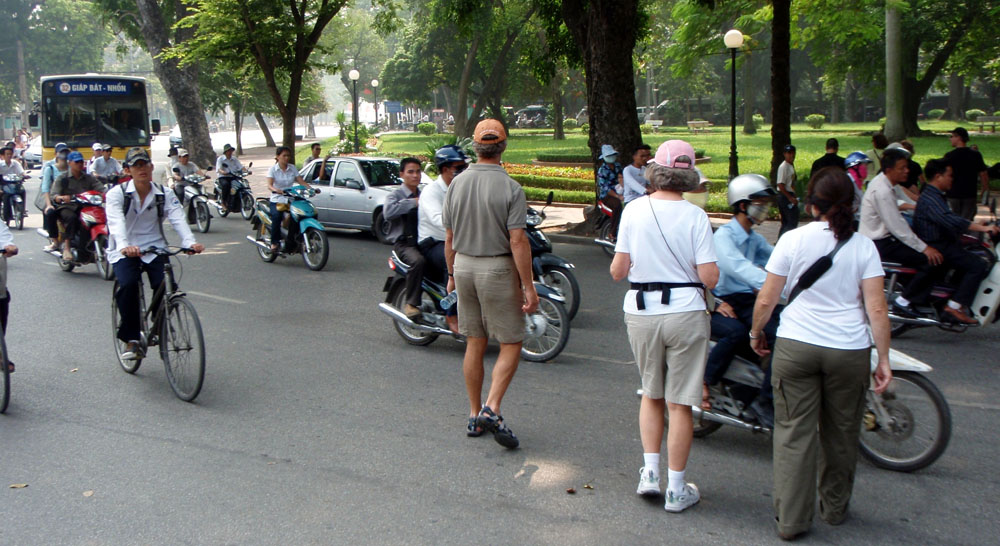
At a busy intersection, Vietnam traffic for tourists can look disorganized at first glance, but it isn't lawless. There are real patterns underneath the apparent chaos — drivers generally move at moderate speeds in dense traffic, use their horns to signal presence rather than aggression, and expect other road users (including pedestrians) to move predictably. Motorbikes in particular can approach from multiple directions at once, especially when a vehicle is turning, so it pays to keep scanning rather than focusing on just what's directly ahead.
PRO TIP: Watch a local pedestrian cross a busy intersection before you try it yourself. Their pace and timing will teach you more in thirty seconds than any written description.
How to Cross the Street in Vietnam
This is the single most useful skill for navigating Vietnam streets, and it's simpler than it looks once you understand the logic. Here's a practical, step-by-step approach:
- Look for a designated pedestrian crossing when one is available.
- Check traffic carefully in both directions before entering the road.
- Walk at a steady, predictable pace — don't rush.
- Avoid suddenly stopping in the middle of traffic.
- Avoid suddenly running across the street.
- Watch the traffic coming toward you, not just the vehicles directly in front.
- Be especially careful with vehicles that are turning — they may not be looking your way.
- Use traffic lights and pedestrian signals when they exist.
- Expect motorbikes to approach from multiple directions, particularly near intersections.
- When in doubt, watch how local pedestrians cross before attempting it yourself.
The reason a steady pace matters so much when you're learning how to cross the street in Vietnam is that approaching riders are constantly making small, real-time judgments about where you'll be in the next second or two. A consistent walking speed lets them calculate a path around you. Sudden stops or sprints break that calculation and are far more likely to cause a close call than walking calmly across at a steady clip.
Pedestrians should never assume a vehicle will automatically stop just because a pedestrian is present — even at a marked crossing. Right of way in the way many Western drivers understand it isn't the operating assumption here; mutual awareness is.
Sidewalks in Vietnam
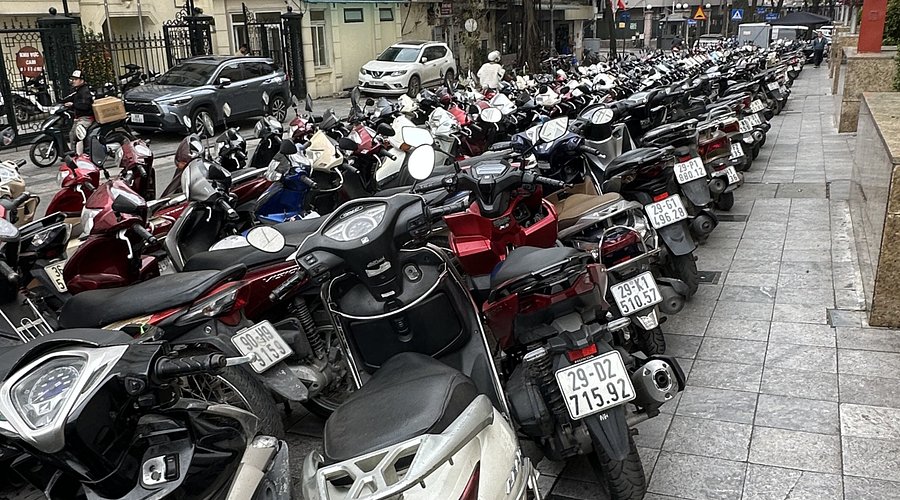
One of the more surprising adjustments for newcomers is that sidewalks in Vietnamese cities are not reserved exclusively for walking in Vietnam. Depending on the street, you'll regularly find sidewalks used for:
- Motorbike parking
- Restaurants and street-food stalls
- Coffee shops and outdoor seating
- Street vendors and small businesses
- Deliveries being loaded or unloaded
- Actual pedestrian walking space (sometimes a narrow strip of what's left)
In practice, this means you'll often need to step around a row of parked motorbikes, walk single-file past a café's plastic stools, or briefly move closer to the edge of the street to get past an obstruction. When that happens, stay alert — you're momentarily sharing space with traffic that wasn't expecting a pedestrian there. Glance behind and beside you before stepping off the curb, even briefly, and move back onto the sidewalk as soon as there's room.
Understanding Vietnamese Addresses
Finding addresses in Vietnam trips up a lot of newcomers, and it's worth understanding why. A full address typically layers several pieces of geography: house or building number, street name, ward (phường or xã), district (quận or huyện), and city or province. In many neighborhoods, especially in older parts of Ho Chi Minh City and Hanoi, an address may also include an alley (hẻm) or smaller lane that branches off the main street — sometimes with its own internal numbering system.
A simplified hypothetical example: an address written as 123/45 Nguyen Van Street, Ward 5, District 3 generally means building 45 inside alley 123 off Nguyen Van Street. The main street number (123) gets you to the mouth of the alley; the second number (45) is how far in you need to go. This layered structure is one of the most common sources of confusion when people are first finding addresses in Vietnam, because it isn't obvious from the number alone that an alley is involved at all.
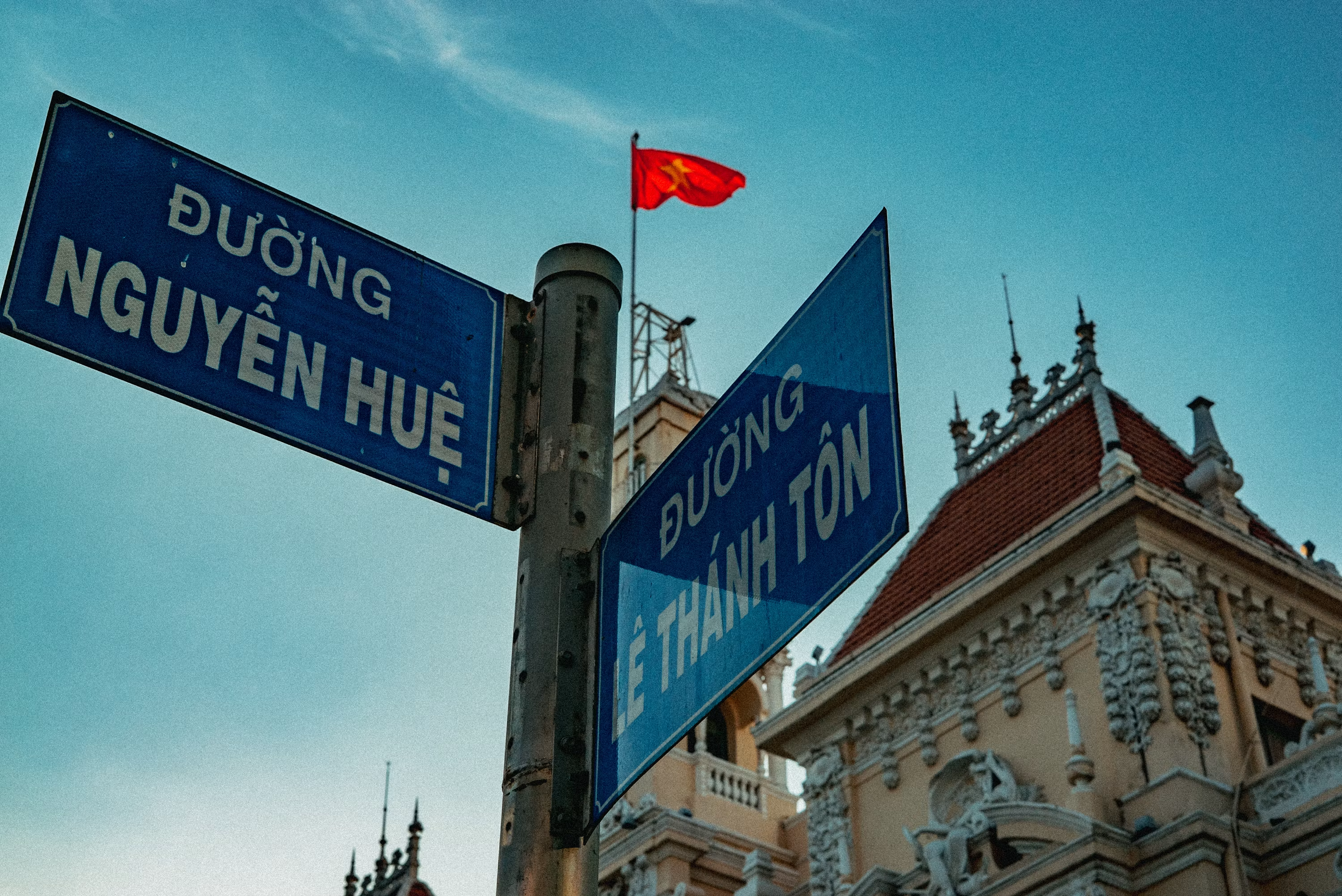
PRO TIP: If an address includes a number-slash-number format or the word "hẻm," don't assume the destination is directly on the main street — it likely means an alley entrance.
Google Maps handles most Vietnamese addresses reasonably well, but the pin doesn't always land on the exact entrance, especially for buildings set back inside an alley or a larger apartment complex. Treat the pin as a strong starting point, not a guarantee — more on that below.
Using Google Maps in Vietnam
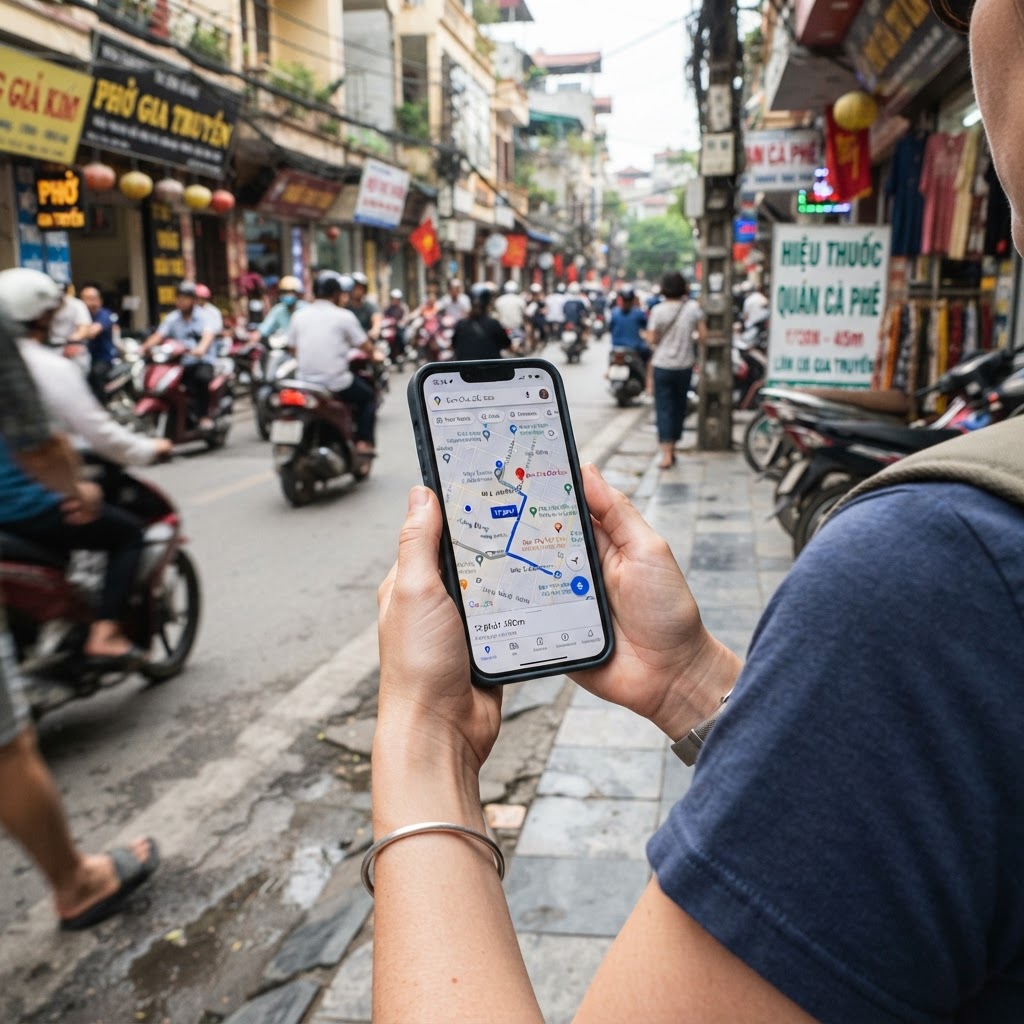
Using Google Maps in Vietnam is genuinely one of the most useful habits you can build, for walking directions, driving directions, and finding almost anything: restaurants, pharmacies, banks and ATMs, convenience stores, hospitals and clinics. A few practical habits make it more reliable:
- Save your accommodation and any frequently visited spots as favorites before you need them in a hurry.
- Share your live location with a travel companion when heading somewhere unfamiliar.
- Check listed business hours, but treat them as a general guide rather than guaranteed — small businesses update them inconsistently.
- When you arrive at a pin, take a moment to confirm you're at the correct entrance, building, or street before assuming you've reached your destination.
- Download offline map data for areas where you expect unreliable mobile data, such as more rural provinces.
Map pins in Vietnam are not always perfectly precise, particularly for addresses located inside alleys or large apartment complexes with multiple entrances. If a pin looks slightly off from what you'd expect, it's worth cross-checking the street name on a nearby sign or asking someone nearby rather than assuming the app made an error.
Using Grab and Other Transportation Apps
Grab is the dominant ride-hailing app across Vietnam and covers motorbike rides, car rides, and food delivery, all from a single app. For anyone still getting comfortable with getting around Vietnam on foot or by motorbike, it's a practical fallback rather than something to avoid using.
A few things worth knowing before you request a ride:
- Double-check your pickup pin is actually where you're standing — GPS drift is common in dense urban areas.
- Confirm the driver's license plate and vehicle color against the app before getting in, since multiple similar vehicles are often nearby.
- Location sharing within the app lets a friend or family member follow your trip in real time.
- Airport pickups are often more complicated because airports designate specific pickup zones for ride-hailing vehicles, which may be a short walk from the arrivals area rather than right outside the door — follow the airport's posted signage or the app's pickup instructions.
We won't quote specific pricing here since rates fluctuate by city, vehicle type, and demand — check current fares directly in the app before booking.
Motorbikes and Pedestrians
Motorbikes are the backbone of daily transportation in Vietnam, and understanding how they interact with pedestrians is central to feeling comfortable on the street. A few situations come up constantly:
- Motorbikes approaching from behind, sometimes on the sidewalk itself.
- Motorbikes turning across a pedestrian's path at intersections or driveways.
- Motorbikes entering or exiting shops, garages, and parking areas.
- Motorbikes traveling through narrow streets at a pace that can feel fast in a tight space.
- Motorbikes parked along sidewalks, narrowing the usable walking space.
None of this requires constant anxiety — it requires ordinary situational awareness, similar to how you'd stay alert near a busy parking lot back home. Glance behind you occasionally, especially near shop entrances and driveways, and give turning vehicles a wide margin whenever possible.
Navigating Narrow Streets and Alleys
Beyond the main roads, much of daily life in Vietnamese cities happens in narrow streets, alleys (hẻm), small lanes, and residential passages. Some of these look quiet and residential but carry a surprising amount of local motorbike traffic — people use them as shortcuts, and residents ride in and out of their homes directly through them.
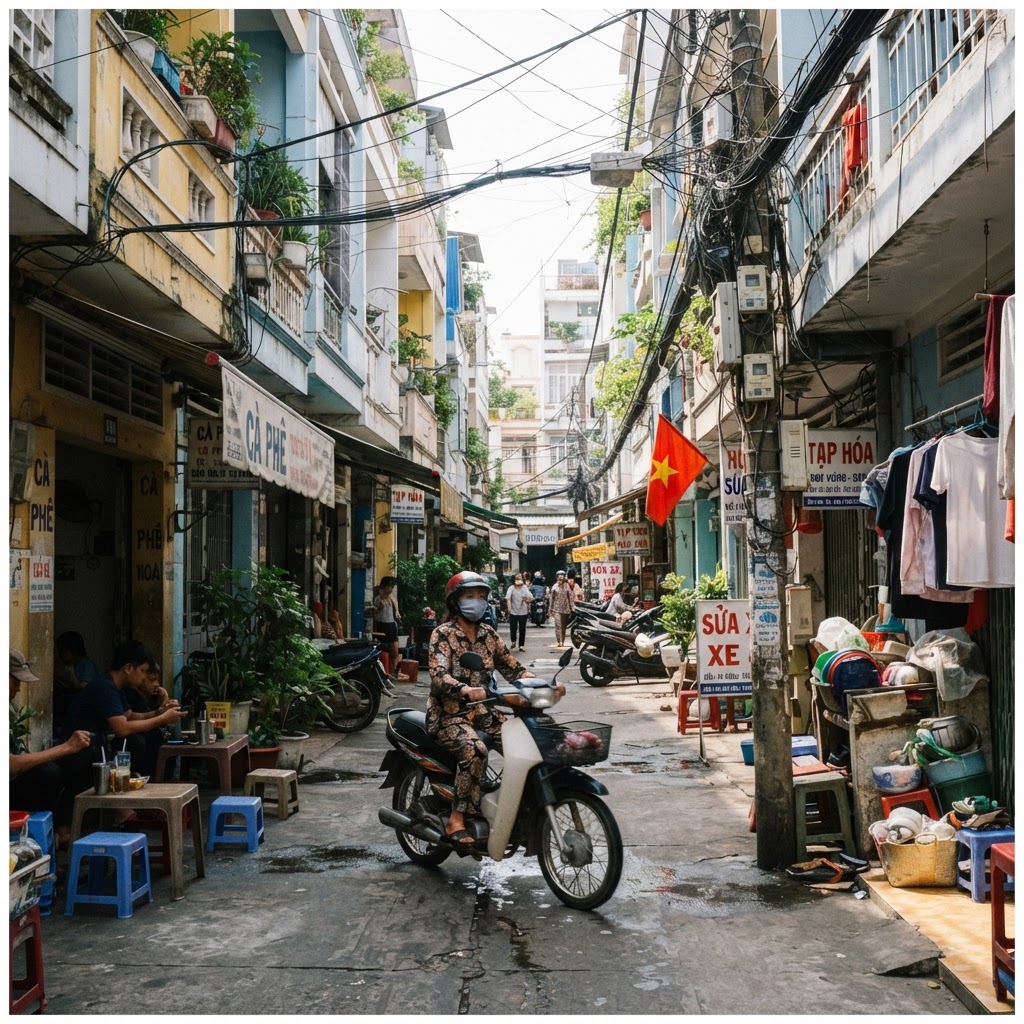
When walking through an alley, keep to one side where possible, stay alert for motorbikes approaching from either direction, and don't assume a quiet-looking lane is free of traffic just because it's narrow. These same alleys are often exactly where the addresses discussed earlier lead, so budget a little extra time to locate the right entrance once you're inside one.
Nighttime Street Navigation
Walking in Vietnam after dark introduces a few additional considerations. Street lighting varies significantly by neighborhood — some main roads are well lit, while side streets and alleys can be quite dim. Motorbike traffic continues at night, sidewalks may have uneven surfaces or ongoing construction that's harder to spot, and vehicles frequently pull in and out of shops and driveways.
- Stick to well-lit main streets when possible, especially in unfamiliar areas.
- Watch your footing on uneven sidewalks and construction zones.
- Keep your phone and valuables secure and out of sight while walking.
- Give extra attention when crossing roads — reduced visibility affects your ability to judge vehicle speed and distance.
Rain and Street Navigation
Vietnam's tropical climate means heavy rain is a regular part of life, particularly during the wet season. Rain affects nearly every part of street navigation: visibility drops for both pedestrians and drivers, motorbike traffic often slows and bunches up, sidewalks can flood, and drainage in some areas struggles to keep up with sudden downpours.
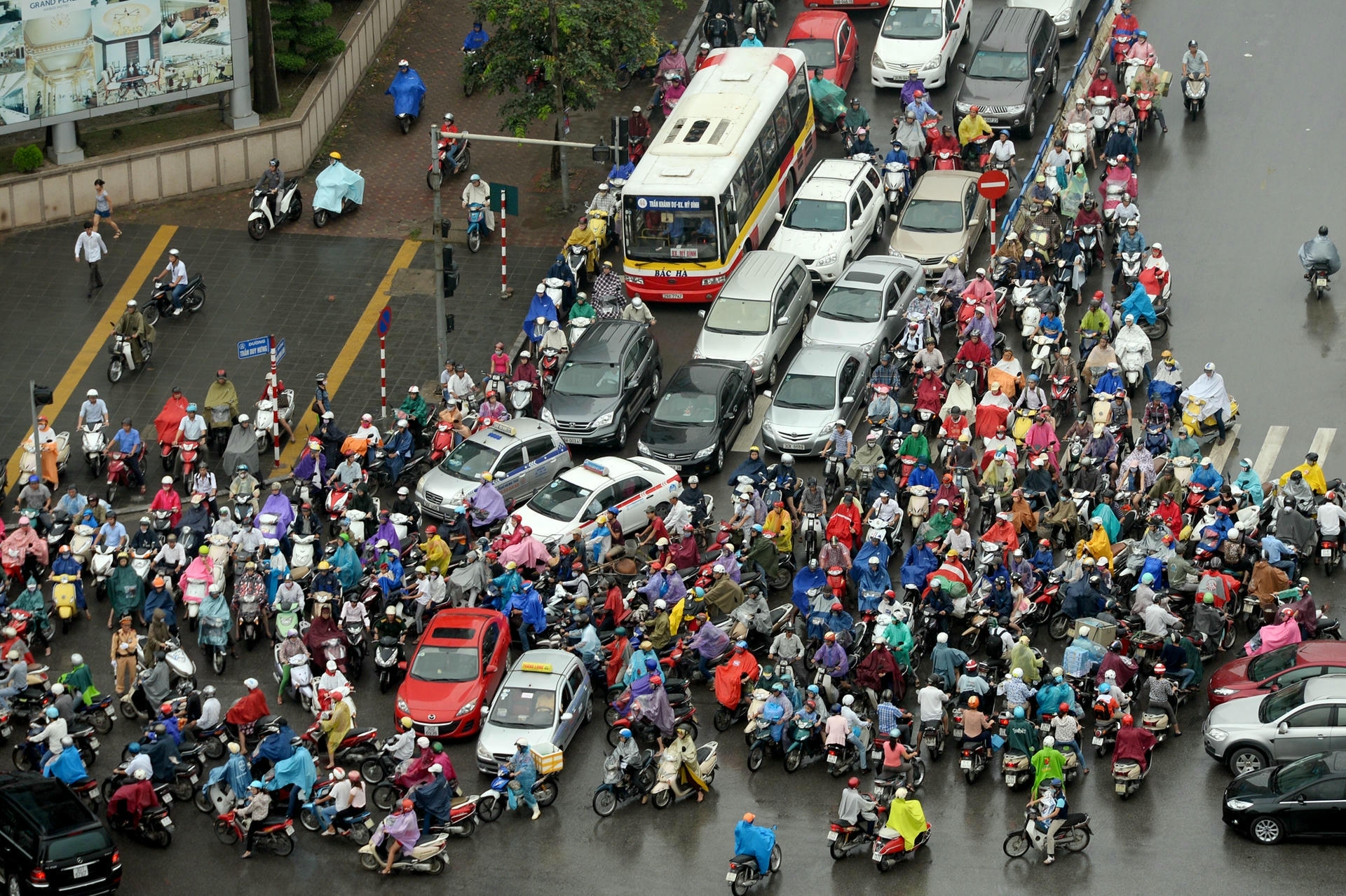
Puddles can be considerably deeper than they appear, sometimes hiding potholes or drainage gaps underneath. Appropriate waterproof footwear with decent grip is worth having, and it's reasonable to simply wait out the heaviest part of a downpour under cover rather than pushing through it — locals do this constantly.
What to Do When You Get Lost
Getting turned around happens to almost everyone at some point. A simple checklist helps keep it low-stress:
- Stop somewhere safe, off to the side.
- Move away from traffic before doing anything else.
- Open Google Maps.
- Check the address you're trying to reach.
- Confirm the district or neighborhood you're actually in.
- Look for a recognizable landmark nearby.
- Ask a local business or hotel front desk for help.
- Use a ride-hailing service if you'd rather not keep walking.
A screenshot of your destination address — in Vietnamese, if possible — is genuinely useful when showing it to a driver, shopkeeper, or passerby, since pronunciation differences can make spoken directions harder to follow than a written address.
Helpful Vietnamese Words and Phrases
You don't need fluency to get around, but a handful of words make street navigation noticeably smoother:
| Vietnamese | Meaning | Rough Pronunciation |
|---|---|---|
| Xin chào | Hello | sin chow |
| Cảm ơn | Thank you | gahm uhn |
| Xin lỗi | Excuse me / Sorry | sin loy |
| Ở đâu? | Where? | uh doh |
| Đường | Street / Road | duhng |
| Hẻm | Alley | hem |
| Bên trái | Left | ben chai |
| Bên phải | Right | ben fai |
| Đi thẳng | Go straight | dee tang |
| Nhà vệ sinh | Restroom | nyah veh sin |
Common Mistakes Foreigners Make
- Assuming sidewalks are always clear for walking.
- Assuming vehicles will always stop, even at a marked crossing.
- Walking while staring at a phone instead of the road.
- Suddenly changing direction while crossing traffic.
- Ignoring turning vehicles at intersections.
- Not checking the exact location of a destination before heading out.
- Assuming every map pin marks the precise entrance.
- Walking into traffic without pausing to observe first.
- Forgetting that alleys can carry significant motorbike traffic.
- Not adjusting plans for heavy rain or flooded streets.
Tips for Your First Week in Vietnam
Beginner Checklist
- Spend time observing traffic before attempting to cross busy roads.
- Practice walking around your immediate neighborhood first.
- Save your accommodation on Google Maps right away.
- Save other important locations as you discover them.
- Keep your phone charged before heading out.
- Make sure you have mobile data available while walking.
- Learn a few basic Vietnamese direction words.
- Take your time — rushing is where most mistakes happen.
- Use Grab when walking or riding feels inconvenient or overwhelming.
- Don't hesitate to ask locals for help — most people are happy to point you the right way.
City-Specific Information
Street conditions vary meaningfully across Vietnam's major cities. These are general observations, not universal rules — every neighborhood within each city has its own character.
Ho Chi Minh City
Ho Chi Minh City has some of the densest motorbike traffic in the country, with major intersections that can feel overwhelming at first, narrow streets branching off busy avenues, and sidewalks that are frequently used for parking and vending.
Hanoi
Hanoi combines heavy motorbike traffic with an older street layout, particularly in the Old Quarter, where narrow streets and pedestrian-heavy areas mix closely with vehicle traffic. Walking in Hanoi often means navigating tighter spaces than in newer districts of Ho Chi Minh City.
Da Nang
Da Nang generally has wider roads and a somewhat calmer street environment compared to Hanoi or Ho Chi Minh City, though traffic awareness is still essential — wider roads simply mean higher average speeds in places.
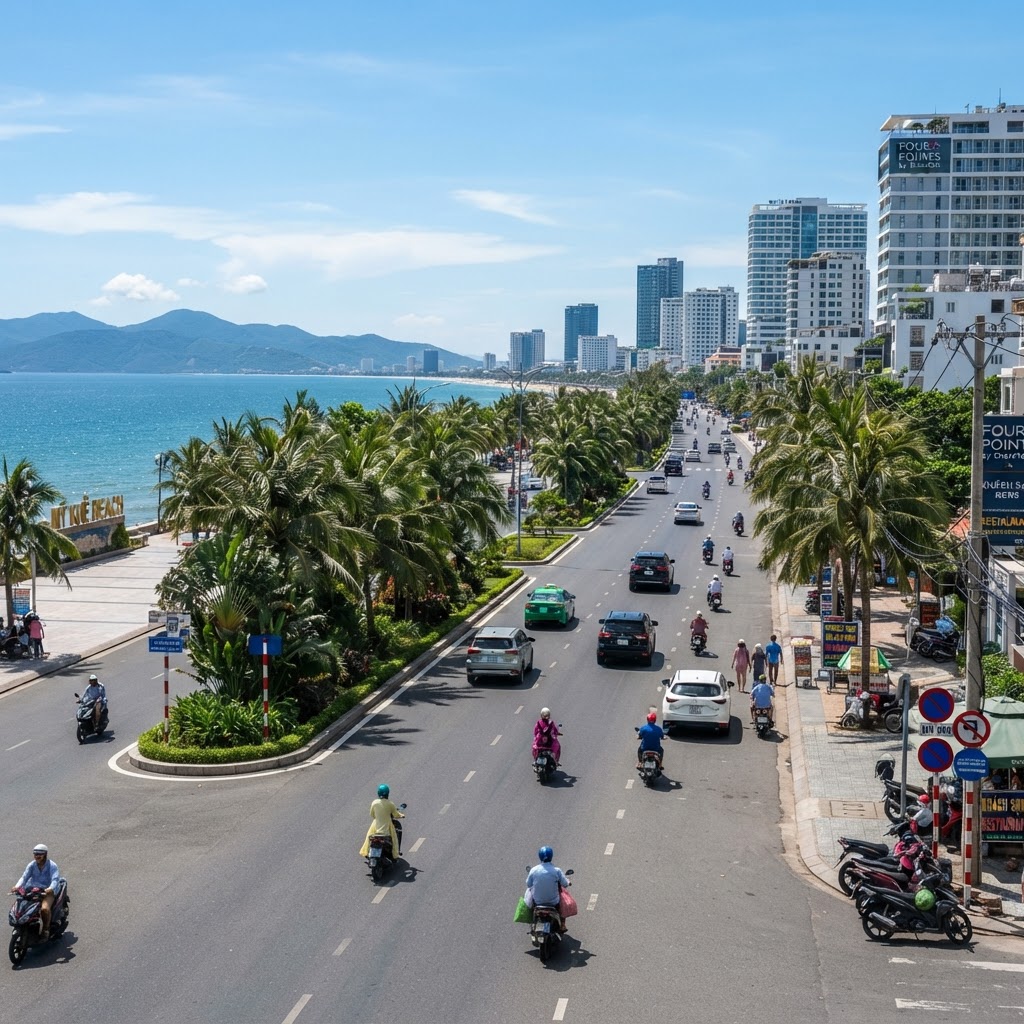
Conditions vary significantly by neighborhood within each city — a quiet residential ward can sit just blocks from a major traffic artery.
Safety Information
Vietnam street safety comes down mostly to attentiveness rather than any single rule. Street conditions vary by city and neighborhood, so it's worth staying generally alert rather than relying on a fixed set of assumptions. In practice, that means following traffic signals where they exist, using designated crossings when available, avoiding distracted walking (especially with a phone out while crossing), keeping valuables secured, exercising extra caution during rain, and asking for local assistance whenever you're uncertain about a situation.
For official, regularly updated travel and safety information for Vietnam, the U.S. Department of State's Vietnam travel page is a reliable official source, separate from general travel-blog advice.
Frequently Asked Questions About Navigating Vietnam Streets
Is it difficult to navigate the streets in Vietnam?
It can feel overwhelming at first because of heavy motorbike traffic and busy sidewalks, but most travelers adjust within a few days. Learning how to navigate the streets in Vietnam mostly comes down to observing traffic patterns, crossing at a steady pace, and using Google Maps carefully.
How do you safely cross the street in Vietnam?
Check traffic in both directions, then walk across at a steady, predictable pace without stopping suddenly or running. Watch for motorbikes approaching from multiple directions, especially turning vehicles, and never assume a vehicle will stop for you.
Do cars drive on the left or right in Vietnam?
Vietnam drives on the right-hand side of the road, the same as the United States and most of continental Europe. This makes the general traffic flow familiar even though the volume and mix of vehicles takes some adjustment.
Can I use Google Maps in Vietnam?
Yes, Google Maps works well in Vietnam for walking directions, driving directions, and finding restaurants, pharmacies, banks, and more. Map pins aren't always perfectly precise, especially for addresses inside alleys, so confirm the entrance once you arrive.
Are Vietnamese sidewalks safe for walking?
Sidewalks are generally usable for walking but are often shared with parked motorbikes, vendors, and outdoor seating, so you may need to step around obstructions. Stay aware of nearby traffic whenever you have to briefly step closer to the road.
Why are there so many motorbikes in Vietnam?
Motorbikes are affordable, fuel-efficient, and well-suited to Vietnam's narrow streets and alleys, making them the most practical form of daily transportation for most households. They remain the dominant vehicle type in nearly every Vietnamese city.
How do I find an address in Vietnam?
Vietnamese addresses often include a street name, house number, ward, and district, and sometimes an alley number before the final building. Google Maps is generally reliable for finding addresses in Vietnam, but it's worth confirming the exact entrance once you're close.
Is it safe to walk around Vietnam at night?
Many main streets are well-lit and busy at night, but side streets and alleys can be dim with uneven sidewalks. Stick to well-lit routes when possible, keep valuables secure, and take extra care when crossing roads after dark.
What is the easiest way to get around Vietnam?
For many newcomers, a combination of walking for short distances and using Grab for longer trips is the most practical way to get around Vietnam. This avoids the learning curve of riding a motorbike while still keeping you mobile.
Should foreigners rent a motorbike in Vietnam?
Some foreigners do rent motorbikes, but you should understand Vietnamese licensing requirements, insurance coverage, and local traffic laws before doing so, and check whether your travel insurance covers motorbike use. A foreign driver's license is not automatically valid in Vietnam, so verify current licensing rules through an official source, such as the U.S. State Department's Vietnam page, before riding.
Final Thoughts
Navigating Vietnam streets is a skill that builds quickly with a bit of observation and a few practical habits: cross at a steady pace, keep scanning for motorbikes from multiple directions, treat map pins as a strong guide rather than gospel, and don't be afraid to lean on Grab or ask a local when you're unsure. None of this requires being fearless — it just requires paying attention.
If you're settling in for longer than a short trip, it's worth pairing this with our guides on renting a home and registering residency in Vietnam, working remotely from Vietnam, and finding a reliable Vietnamese mailing address — all part of the broader practical playbook for living in Vietnam on RemoteLifeVietnam.com.
Continue Planning Your Move
Explore more practical guides on banking, visas, and residency for Americans living in Southeast Asia — start with our international banking guide or browse the full resource library.