

Finding a place to live in Vietnam can be one of the more straightforward parts of moving abroad — but renting a home in Vietnam as a foreigner involves more than just agreeing on a monthly rent. You need to understand the rental process, your contract, your deposit, your landlord's responsibilities, and how temporary residence registration works.
Whether you are a digital nomad looking for a short-term apartment in Ho Chi Minh City, a retiree settling in Da Nang, or a remote worker planning a longer stay in Hanoi, this guide walks you through the practical steps of finding housing, signing a rental agreement, paying rent, and staying on the right side of Vietnam's residence registration requirements.

Renting in Vietnam — 5 Things to Remember
- Verify the property and landlord. Confirm the person you are dealing with is the owner or authorized representative.
- Get a written rental agreement. A verbal agreement is not the same as a written contract.
- Keep records of every payment. Save bank transfers, receipts, and deposit documentation.
- Confirm temporary residence registration. Ask your landlord to register your stay with the local police.
- Keep your immigration and residence documents organized. Have your passport, visa, and registration information ready.
Quick Answer: Can Foreigners Rent a Home in Vietnam?
Yes. Foreigners can rent apartments, houses, condos, and serviced apartments in Vietnam, subject to applicable immigration, housing, and accommodation requirements. Foreign residents should make sure their temporary residence is properly declared at their accommodation.
The basic process looks like this:
Find a property → verify the landlord → inspect the property → agree on rent → sign the contract → pay the deposit/rent → provide passport and immigration information → confirm temporary residence declaration.
💳 Paying Rent from Abroad? Consider Remitly
If your landlord agrees to receive rent via international transfer, Remitly is a convenient option. Each transfer automatically creates a payment record you can keep for your files, and the currency conversion rates are reasonable. Get started with Remitly →
Finding a Residence in Vietnam
Foreigners in Vietnam have several options for finding housing. Each has its own advantages and trade-offs.
Real Estate Agents
Working with a real estate agent can save time, especially if you are new to Vietnam. Agents can arrange viewings, help negotiate rent, and explain contract terms. The downside is that agents typically charge a commission — often equivalent to one month's rent — and not all agents are experienced with foreign tenants.
Local Property Websites
Vietnamese property websites such as Batdongsan.com.vn and ChoTot can offer more listings than English-language platforms. The trade-off is that many listings are in Vietnamese, and you may need a Vietnamese-speaking friend or translator to communicate with landlords.
Facebook and Expat Housing Groups
Facebook groups for expats and digital nomads in Vietnam can be a good source of leads for apartments and houses. However, you should never send a deposit before verifying the property and landlord in person. Scams do occur, and a listing that looks too good to be true often is.
Serviced Apartments
Serviced apartments are popular with newly arrived foreigners. These units typically come furnished, with internet, cleaning, utilities, and building services sometimes included in the monthly rate. They are more expensive than standard rentals, but they reduce the number of things you need to set up yourself.

Condos and Apartment Buildings
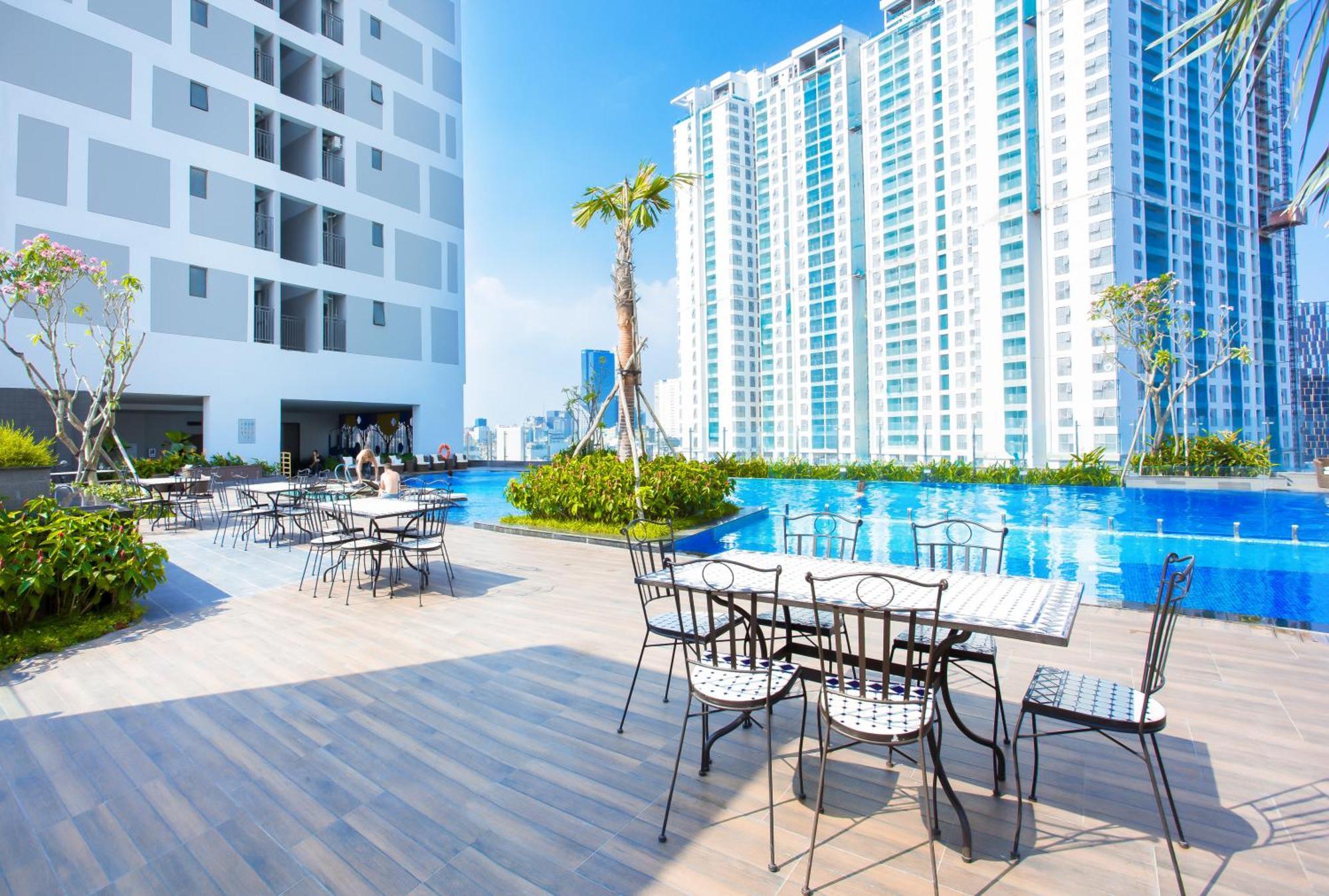
Modern condo and apartment buildings in cities like Ho Chi Minh City, Hanoi, and Da Nang often come with security, elevators, parking, building management, gyms, pools, and other amenities. These buildings are popular with foreign renters because they offer a level of convenience and security that standalone houses may not.
Private Houses
Renting a private house can give you more space and privacy, which is appealing for families or those who want a garden or garage. However, houses may involve additional responsibilities — you may need to arrange your own internet, security, and maintenance, and some houses may not be set up for foreign-tenant registration.
Warning: Never send a large deposit before verifying the property, the landlord, the rental agreement, and the foreign-tenant registration arrangements. If you are not in Vietnam yet, consider booking a short-term stay first and viewing apartments in person.
What to Check Before Renting
Before you sign anything or hand over money, work through this checklist:
| What to Check | Why It Matters |
|---|---|
| Is the person the owner or authorized representative? | Protects you from fraud |
| Can the property legally be rented to a foreigner? | Not all properties may be eligible |
| Will the landlord register temporary residence? | Required for legal stay |
| Is the rental contract written? | Protects both parties |
| What is the security deposit? | Typically 1–3 months' rent |
| What is the monthly rent? | Confirm in VND or USD |
| What utilities are included? | Electricity, water, internet |
| Who pays electricity, water, internet? | Varies by agreement |
| Are building management fees included? | Can add to monthly cost |
| Is parking included? | Important if you have a motorbike |
| Are there restrictions on guests? | Some buildings have rules |
| What happens if the tenant leaves early? | Deposit forfeiture? |
| How and when is the deposit returned? | Get it in writing |
| Who handles repairs? | Landlord or tenant? |
| Is there 24-hour security? | Safety and peace of mind |
| Does the building have rules for foreign residents? | Some buildings have specific policies |
How Much Does It Cost to Rent in Vietnam?
Rental prices in Vietnam vary substantially depending on the city, neighborhood, apartment size, building quality, furnishing, amenities, lease length, and proximity to business districts or expat areas. We do not quote specific price ranges here because they change frequently and depend on many factors.
Instead, here is an example calculation — clearly labeled as an example and not a statement of typical Vietnamese rental prices:
Example Move-In Cost Calculation
| Monthly rent | $600 |
| Security deposit (2 months) | $1,200 |
| First month's rent | $600 |
| Estimated move-in payment | $1,800 |
This is only an example. Actual rents and deposits vary widely.
How to Pay Rent in Vietnam
Common payment methods include:
- Vietnamese bank transfer — the most common method for longer-term rentals
- Cash in Vietnamese dong — still widely used, especially for smaller rentals
- International bank transfer — less common but possible if agreed with the landlord
- Other methods — anything agreed upon by both the landlord and tenant
Whatever method you use, retain proof of every payment:
- Bank-transfer confirmations
- Receipts for cash payments
- Deposit documentation
- The signed rental contract
- Written communication concerning payments
Payment records are especially important for longer-term rentals. If a dispute arises over rent, deposits, or early termination, your documentation is your best protection. For more on managing money in Vietnam, see our guides on banking in Vietnam and money transfers.
Understanding the Rental Contract
Always insist on a written rental agreement. A written contract protects both you and the landlord and reduces the chance of misunderstandings.
Important terms to look for in a Vietnamese rental contract:
- Tenant's full name and passport information
- Landlord's full name and contact information
- Property address
- Rental amount (in VND or USD)
- Payment schedule (monthly, quarterly, etc.)
- Security deposit amount
- Lease duration
- Utilities (which are included, which are extra)
- Maintenance responsibilities
- Building fees
- Parking arrangements
- Guest policies
- Early termination terms
- Deposit refund terms
- Notice requirements for ending the lease
- Temporary residence registration responsibilities
Never assume that a verbal agreement provides the same protection or clarity as a written rental agreement. If the landlord is unwilling to put terms in writing, that is a red flag.
Temporary Residence Registration in Vietnam
This is one of the most important parts of renting in Vietnam as a foreigner — and it is often overlooked.
Foreigners staying in Vietnam must have their temporary residence properly declared at their accommodation. The accommodation establishment or the person responsible for the accommodation (typically your landlord or building management) generally handles this declaration with the local police authority.
The declaration typically involves providing:
- Passport information
- Immigration information (visa type, entry date)
- Accommodation address
- Temporary residence details (length of stay)
Declarations can be made through electronic procedures or, in some cases, paper procedures at the local police station. The specific process and deadlines can vary by location and can change over time, so always verify current requirements with Vietnamese authorities or your accommodation provider.
Ask your landlord: "Will you register my temporary residence with the local police?"
Signing a rental agreement does not automatically mean your temporary residence has been declared. You need to confirm this separately.
What Documents Should a Foreigner Have?
Keep these documents organized and accessible:
- Passport (valid and with sufficient remaining validity)
- Visa, e-visa, or other valid immigration documentation
- Entry information (arrival date, port of entry)
- Rental agreement (signed copy)
- Property address (written in Vietnamese for ease of communication)
- Landlord or property manager contact information
- Proof of rent and deposit payments
- Temporary residence registration information
Keep digital copies of all documents stored securely — a cloud service or encrypted phone storage works well. For more on getting started in Vietnam, see our Start Here guide.
Police Registration and Residence Inspections
Are Police Inspections of Foreign Residences Random in Vietnam?
Police inspections of residences where foreigners stay can be random in Vietnam. There is not necessarily a fixed inspection schedule for every foreign resident.
Local authorities may conduct checks relating to:
- Temporary residence status
- Immigration status
- Passport information
- Accommodation records
- Foreign-resident registration
- Compliance with applicable laws
- Public security and administrative requirements
An inspection can occur without the resident having been given a routine recurring inspection date. Not every foreigner's residence will be inspected, and there is no guaranteed monthly or yearly schedule.
The best approach is to keep your documentation organized and make sure your landlord or accommodation provider has properly completed the required temporary-residence declaration. If an inspection does occur, having your paperwork in order makes the process straightforward.
What Happens When You Move?
Moving to another apartment or house in Vietnam can require a new temporary residence declaration at your new address.
Ask your new landlord or accommodation provider to complete the appropriate registration after you move. Do not assume that registration at your previous address automatically transfers to your new address — it does not.
Landlord Responsibilities
Working with a landlord who understands the requirements for foreign tenants is important. A responsible landlord typically handles:
- Providing a legitimate rental arrangement
- Maintaining appropriate accommodation records
- Providing information required for temporary residence declaration
- Communicating with building management where necessary
- Maintaining agreed property conditions
- Providing receipts or payment confirmation when appropriate
Exact responsibilities can depend on the type of accommodation and applicable Vietnamese regulations. This is general practical advice, not a statement of specific legal obligations.
Tenant Responsibilities
- Keep passport and immigration documents valid
- Provide accurate information to the landlord
- Confirm temporary residence has been declared
- Keep a copy of the rental contract
- Keep payment records
- Follow building rules
- Report changes of residence
- Update residence information after moving
- Cooperate with legitimate administrative requirements
Before You Move In: Final Checklist
Property
- Inspected the apartment
- Checked appliances
- Checked water pressure
- Checked air conditioning
- Checked internet
- Checked locks and security
- Checked furniture
- Documented existing damage
Contract
- Rent confirmed
- Deposit confirmed
- Lease duration confirmed
- Utilities confirmed
- Maintenance confirmed
- Early termination terms confirmed
- Deposit refund terms confirmed
Immigration & Residence
- Passport provided to landlord
- Visa/immigration status verified
- Temporary residence declaration discussed
- Landlord agrees to complete required declaration
- New address recorded
Payment
- Deposit receipt obtained
- First rent payment documented
- Bank transfer confirmation saved
Common Mistakes Foreigners Should Avoid
- Paying a deposit before seeing the property. Always visit in person or have a trusted person verify it.
- Renting without a written agreement. A verbal promise is not the same as a contract.
- Failing to verify the landlord. Confirm ownership or authorization.
- Assuming the landlord automatically registered temporary residence. Ask explicitly.
- Not keeping payment records. Save every transfer and receipt.
- Ignoring building rules. Some buildings have specific policies for foreign residents.
- Assuming residence registration follows automatically after moving. It does not — you need a new declaration at your new address.
- Giving a passport to an unknown person without understanding why it is required. Your passport is needed for registration, but understand who is handling it and why.
- Not documenting existing property damage. Take photos on move-in day.
- Assuming information found online is still current. Rules and procedures change. Verify with official sources.
Practical Advice for Digital Nomads and Long-Term Visitors
If you are planning to stay in Vietnam for several months or longer, think beyond simply finding the cheapest apartment. Consider:

- Reliable internet — test the connection before signing
- Backup internet — a SIM card with data or a portable hotspot
- Workspace — enough room for a desk, or proximity to a coworking space
- Noise levels — visit at different times of day
- Power reliability — outages happen; consider a UPS for your work setup
- Air conditioning — essential in Vietnam's climate
- Building security — 24-hour security and secure access
- Transportation — proximity to main roads and ride-hailing availability
- Nearby restaurants and grocery stores — daily convenience
- Healthcare access — distance to clinics and hospitals (see our expat insurance guide)
- Banking — proximity to ATMs and bank branches
- Laundry — in-building, nearby service, or self-service
- Fitness facilities — gym in the building or nearby
- Neighborhood safety — research the area, especially at night
- Airport access — how far to the nearest international airport
- Lease flexibility — can you extend or shorten the lease if needed?
For more on life as a remote worker in Vietnam, see our guide on working abroad in Vietnam.
Official Resources
For legal and immigration matters, rely on official Vietnamese government sources rather than blogs or expat websites alone. Useful starting points include:
- Vietnamese Ministry of Public Security — oversees immigration and residence registration
- Vietnamese government legal database — for current laws and regulations
- Official immigration resources — for visa and residence requirements
- Local government and public-service websites — for area-specific procedures
Rules concerning immigration, temporary residence, housing, and foreign residents can change. Always verify current requirements with Vietnamese authorities or a qualified local professional.
For a broader directory of official sources, see our resources page.
Frequently Asked Questions
Can foreigners rent property in Vietnam?
Yes. Foreigners can rent apartments, houses, condos, and serviced apartments in Vietnam, subject to applicable immigration, housing, and accommodation requirements. Temporary residence must be properly declared at the accommodation.
Can Americans rent apartments in Vietnam?
Yes. Americans can rent apartments in Vietnam under the same general framework as other foreigners. A valid passport and immigration documentation are required, and temporary residence must be registered with the local police by the landlord or accommodation provider.
Does a foreigner need temporary residence registration in Vietnam?
Yes. Foreigners staying in Vietnam must have their temporary residence properly declared at their accommodation. The accommodation provider or landlord generally handles the declaration with the local police authority.
Who registers a foreigner's temporary residence in Vietnam?
The accommodation establishment or the person responsible for the accommodation (typically the landlord or building management) generally handles the temporary residence declaration with the local police. The tenant should confirm this has been done.
Can police inspect a foreigner's residence in Vietnam?
Yes. Local authorities may conduct checks relating to temporary residence, immigration status, and accommodation records. Keeping your documentation organized and ensuring your landlord has completed the required declaration helps the process go smoothly.
Are police inspections of foreign residences random?
Police inspections of residences where foreigners stay can be random. There is not necessarily a fixed inspection schedule for every foreign resident. An inspection can occur without a prior recurring inspection date.
What documents does a foreigner need to rent an apartment in Vietnam?
A valid passport, visa or other immigration documentation, the signed rental agreement, and information needed for temporary residence declaration. Keeping digital copies of all documents is recommended.
How much is a typical rental deposit in Vietnam?
Rental deposits vary by property and agreement. Deposits are commonly equivalent to one to three months of rent, but the exact amount should be confirmed in the written rental contract.
Can rent be paid by bank transfer in Vietnam?
Yes. Vietnamese bank transfer is a common payment method for longer-term rentals. Cash in Vietnamese dong is also widely used. Retain proof of every payment regardless of the method.
What happens when I move to another apartment in Vietnam?
Moving to a new address can require a new temporary residence declaration. Ask your new landlord or accommodation provider to complete the registration. Do not assume that registration at your previous address automatically transfers.
Does signing a rental contract automatically register temporary residence?
No. Signing a rental agreement does not automatically mean your temporary residence has been declared. You must confirm separately with your landlord that the declaration has been submitted to the local police.
Should I keep proof of rent payments in Vietnam?
Yes. Keep bank-transfer confirmations, receipts, deposit documentation, and the signed rental contract. Payment records are important for resolving disputes and demonstrating compliance.
Can a foreigner rent a house instead of an apartment in Vietnam?
Yes. Foreigners can rent private houses in Vietnam. Houses can offer more space and privacy but may involve additional responsibilities such as arranging internet, security, and maintenance.
What should I check before paying a rental deposit in Vietnam?
Verify that the person is the owner or authorized representative, inspect the property in person, confirm the written contract terms, clarify utilities and fees, and confirm that the landlord will register your temporary residence before you pay.
Ready to Live and Work in Vietnam?
Remote Life Vietnam is your field manual for living, working, and thriving in Southeast Asia. Explore our complete resource directory, learn about Vietnam visas, or read more articles about life in Vietnam.
💳 Paying Rent from Abroad? Consider Remitly
If your landlord agrees to receive rent via international transfer, Remitly is a convenient option. Each transfer automatically creates a payment record you can keep for your files, and the currency conversion rates are reasonable. Get started with Remitly →