

Decree 320/2026 eID: What Foreigners Living in Vietnam Need to Know
By Remote Life Vietnam · Last Updated: September 2026
Quick Answer
Decree No. 320/2026/NĐ-CP, issued on August 13, 2026, amends Vietnam's electronic identification and authentication rules. It takes effect on September 28, 2026. For foreigners in Vietnam, the key change is a defined process for obtaining an electronic identification (eID) account through the provincial-level Police immigration authority, which may include collecting facial images and fingerprints checked against Vietnam's national immigration database.
Vietnam is expanding its electronic identification and authentication system. If you are a foreigner living in Vietnam — an expat, digital nomad, retiree, or long-term visitor — a new government decree introduces important changes to how electronic identification accounts are issued to non-citizens.
This guide explains Decree 320/2026 eID Vietnam in plain English: what it is, why it matters, how foreigners apply, what to prepare, and the key dates to watch.
What Is Decree 320/2026/NĐ-CP?
Decree No. 320/2026/NĐ-CP was issued by the Government of Vietnam on August 13, 2026. It amends and supplements Decree No. 69/2024/NĐ-CP, which governs electronic identification and authentication in Vietnam.
The decree takes effect on September 28, 2026.
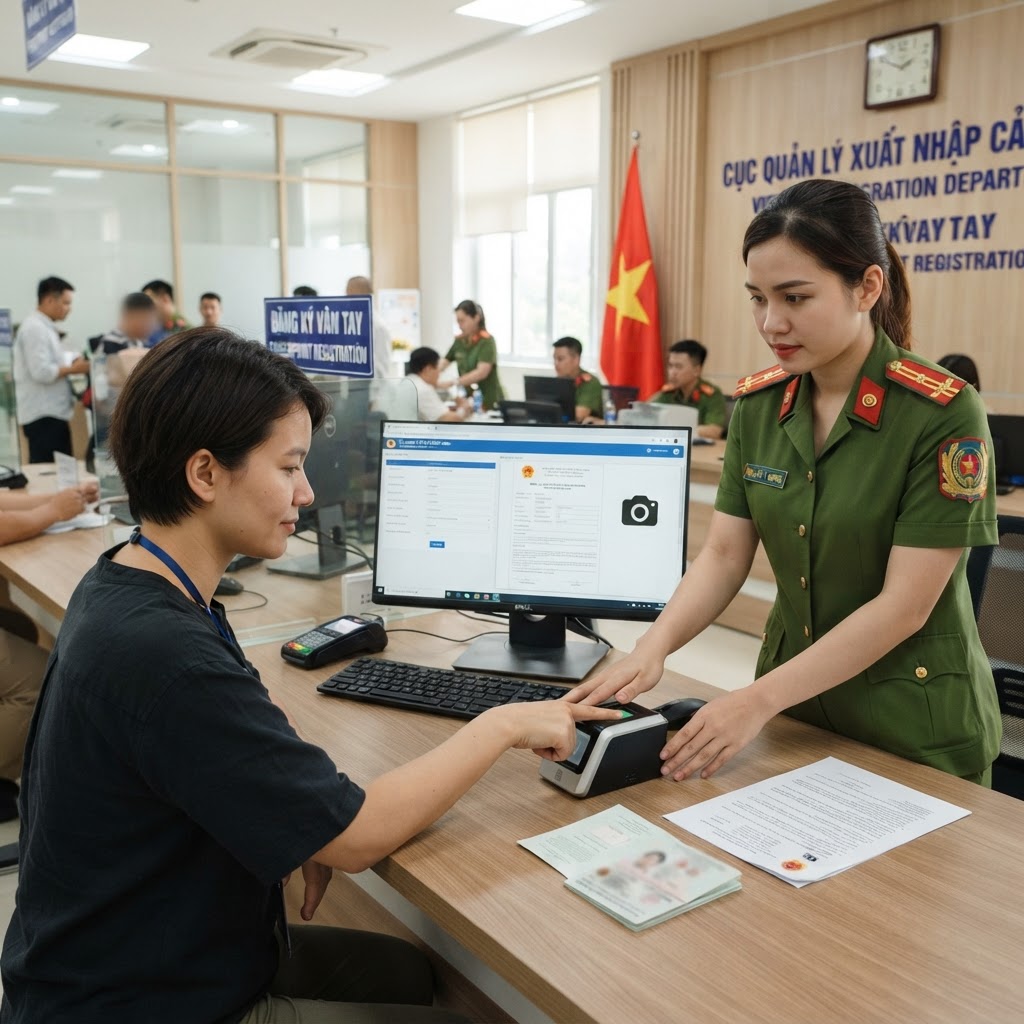
One important change for foreigners is the process for obtaining an electronic identification account. Foreigners must work with the immigration authority of the provincial-level Police and provide their passport or equivalent international travel document.
During the registration process, authorities may collect:
- Personal information
- A facial photograph
- Fingerprints
- A legally registered Vietnamese mobile phone number, where applicable
- Email address, if available
- Other information needed for integration into Vietnam's National Identification Application
Facial images and fingerprints are collected so they can be checked against information contained in Vietnam's national immigration database.
Why Does Decree 320/2026 Matter to Foreigners in Vietnam?
Vietnam is expanding and strengthening its electronic identification and authentication system. For foreigners living in Vietnam, this means eID can increasingly be used to:
- Identify and authenticate individuals electronically
- Access government and public services
- Complete certain administrative procedures online
- Access information and documents integrated into the National Identification Application
- Connect digital accounts with Vietnam's electronic identification system
- Support digital transactions and services
Important: Having an eID account does not automatically mean that every government service, bank, business, or transaction will immediately require it. The decree establishes the framework and process, but how quickly individual services adopt eID requirements will vary.
How Foreigners Apply for an Electronic Identification Account
Under Decree 320/2026, the process for foreigners to obtain a Vietnam electronic identification account is defined step-by-step:
- Visit the immigration authority of the provincial-level Police. This is the Police department responsible for immigration at the provincial level where you reside or are registered.
- Present a passport or equivalent international travel document. This is your primary identification for the registration process.
- Complete the required application information. Provide accurate personal details as requested by the authorities.
- Provide a registered mobile phone number and email address, if applicable. A legally registered Vietnamese mobile phone number may be required; an email address is requested if available.
- Police personnel enter the information into the electronic identification and authentication system. The officer inputs your data into the official system.
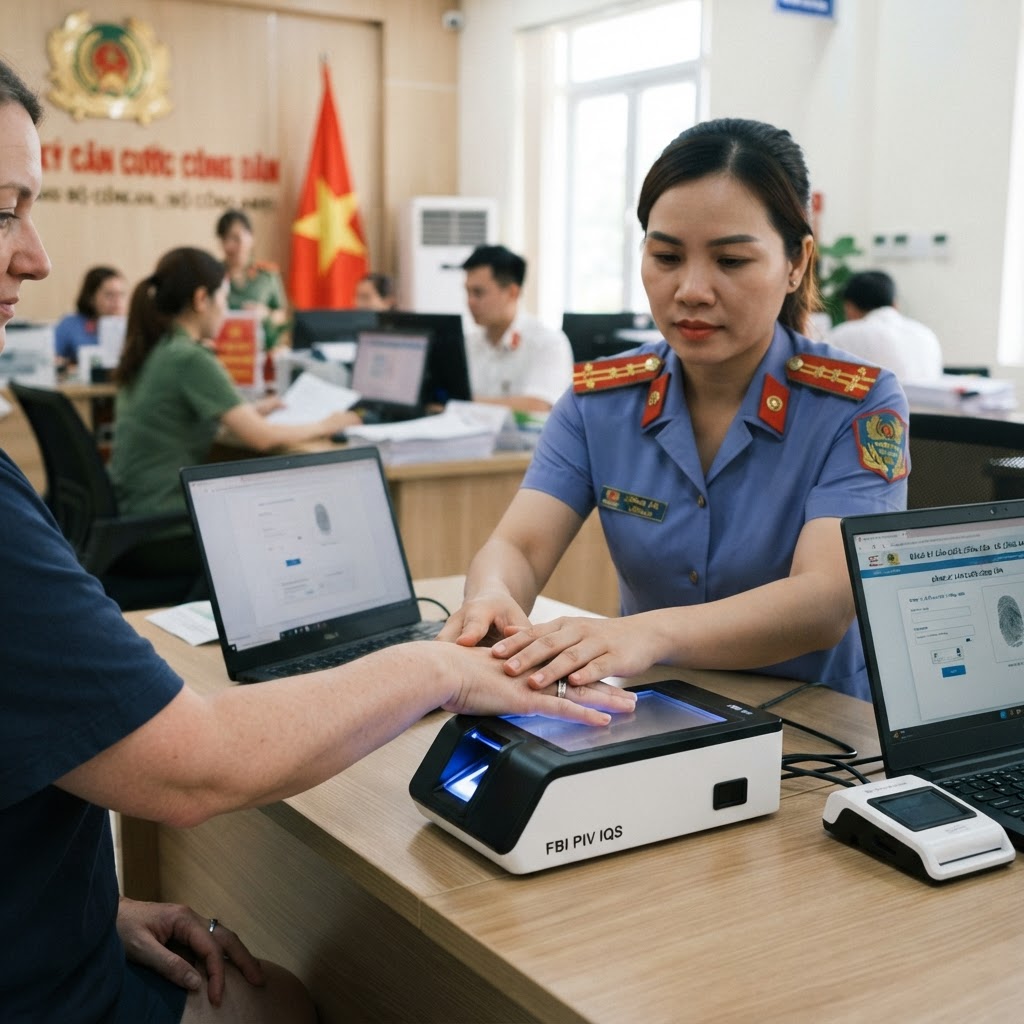
- Facial images and fingerprints are collected. This biometric information is gathered as part of the registration.
- The biometric information is checked against Vietnam's national immigration database. This verification step helps confirm identity.
- The applicant is instructed to download and install Vietnam's National Identification Application and complete the required information.
Processing Times for Foreigner eID Accounts
The decree provides different processing periods depending on whether facial and fingerprint information is already available in the national immigration database:
| Biometric Status in Immigration Database | Maximum Processing Time |
|---|---|
| Biometric information already available | Up to 2 working days |
| Biometric information not already available | Up to 5 working days |

Before Going to the Police Immigration Office
Preparation helps the process go smoothly. Use this checklist before you visit:
- Valid passport — your primary identification document
- Relevant immigration documents — visa, temporary residence card, or other applicable paperwork
- Vietnamese mobile phone number — a legally registered number, where required
- Email address — if available, for account communications
- Accurate personal information — details matching your official documents
- A smartphone — capable of downloading and using the National Identification Application
Note: Administrative procedures can change. Confirm current procedures and required documents with the relevant Vietnamese immigration authority before visiting. Requirements may vary by province or over time.
Important Dates: Decree 320/2026 Timeline
Several key dates in the decree affect different groups. It is important to distinguish dates that apply to national digital platforms and existing electronic transaction accounts from requirements specifically applying to individual foreigners.
| Date | What Happens | Who It Applies To |
|---|---|---|
| August 13, 2026 | Decree 320/2026/NĐ-CP issued | Government of Vietnam |
| September 28, 2026 | Decree takes effect | All parties covered by the decree |
| December 31, 2026 | National digital platforms must integrate eID accounts for authentication, login, and applicable digital transactions | National digital platforms |
| June 30, 2027 | Certain existing electronic transaction accounts in the banking sector must be linked and authenticated with electronic identification accounts | Banking sector electronic transaction accounts |
The December 31, 2026 and June 30, 2027 deadlines apply to national digital platforms and banking-sector electronic transaction accounts — not directly to individual foreigners. Individual foreigners follow the registration process described above when they need an eID account.
What Is Vietnam eID?
Vietnam eID is Vietnam's electronic identification and authentication system. It allows individuals to use an electronic identity to authenticate themselves and access connected government services, information, documents, and other permitted digital services.
The electronic identification account is linked to Vietnam's National Identification Application. After registration, the applicant uses the app to access connected services. Exactly which services each foreign resident will be able to access depends on how individual government agencies and service providers implement eID integration — the decree does not guarantee universal access to every service for every user.

Electronic Identification for Foreigners
Decree 320/2026 specifically updates the procedures for foreigners. This is a notable development because it establishes a defined pathway for non-citizens to participate in Vietnam's electronic identification system.
Foreign residents should pay attention to eID developments because Vietnam is increasingly connecting government services and digital transactions to electronic identification. However, the decree does not state that every foreigner is automatically required to obtain an eID. Whether you need one depends on the services you use and how implementation unfolds over time.
What About Privacy and Personal Data?
The decree requires the use of electronic identification information to comply with applicable laws concerning personal data protection, information security, privacy, and confidentiality.
This means biometric and personal information collected during eID registration is subject to Vietnam's data protection framework. We avoid making broad claims about how long biometric information is stored or what purposes it may be used for beyond what the decree identifies — those details depend on implementation and applicable Vietnamese law.
Stay informed: Vietnam's personal data protection rules continue to evolve. For the most current information, consult the official Vietnamese government sources listed at the bottom of this article.
Practical Advice for Remote Workers and Expats
If you are living in Vietnam as a remote worker, digital nomad, retiree, or long-term visitor, here is practical guidance for navigating the eID system:
Key Things to Remember
- Keep your passport and immigration information current. Your passport is your primary ID for eID registration. Expired or inconsistent documents can slow the process.
- Maintain access to the phone number used for registration. Your Vietnamese mobile number may be used for verification and account access.
- Keep your email address current. If you provided an email during registration, make sure you can still receive messages at that address.
- Watch for updates to Vietnam's electronic identification procedures. Implementation details may change as the decree is rolled out.
- Follow instructions provided by Vietnamese immigration authorities. Local officials will guide you through the actual process at your registration office.
- Use only official Vietnamese government applications and websites when dealing with identification information. Avoid third-party apps claiming to offer eID services.
- Avoid giving biometric or identification information to unofficial intermediaries. Only provide this information to authorized Vietnamese government personnel at official offices.
Frequently Asked Questions
What is Decree 320/2026/NĐ-CP?
Answer: Decree 320/2026/NĐ-CP is a Vietnamese government decree issued on August 13, 2026, that amends and supplements Decree 69/2024/NĐ-CP on electronic identification and authentication in Vietnam. It takes effect on September 28, 2026.
The decree updates the rules and procedures for Vietnam's electronic identification system, including a defined process for foreigners to obtain an eID account.
When does Decree 320/2026 take effect?
Answer: Decree 320/2026 takes effect on September 28, 2026.
After this date, the amended electronic identification and authentication rules — including the foreigner registration process — apply.
Does Decree 320/2026 apply to foreigners in Vietnam?
Answer: Yes, the decree includes specific provisions for foreigners. It establishes a process for foreigners to obtain a Vietnam electronic identification account through the provincial-level Police immigration authority.
However, the decree does not state that every foreigner is automatically required to obtain an eID. Whether you need one depends on the services you use.
Will foreigners have to provide fingerprints?
Answer: During eID registration, authorities may collect fingerprints as part of the biometric information. Fingerprints are checked against Vietnam's national immigration database.
This biometric collection is part of the registration procedure described in the decree. Do not assume it is optional if the decree requires it for the applicable procedure.
Will foreigners have to provide a facial photograph?
Answer: Yes, a facial photograph may be collected during eID registration. The facial image is checked against Vietnam's national immigration database.
Like fingerprints, this is part of the biometric verification process described in the decree.
Where does a foreigner apply for an electronic identification account?
Answer: Foreigners apply at the immigration authority of the provincial-level Police — the Police department responsible for immigration at the provincial level.
You will need to present your passport or equivalent international travel document and complete the required application information.
How long can it take to receive a foreigner's eID account?
Answer: The decree states processing may take up to 2 working days if biometric information is already in the national immigration database, or up to 5 working days if it is not.
These are maximum stated periods. Actual processing times may vary — do not assume your application will always be completed within these timeframes.
What documents should a foreigner bring?
Answer: Bring a valid passport, relevant immigration documents (visa, temporary residence card, etc.), a legally registered Vietnamese mobile phone number if required, an email address if available, accurate personal information, and a smartphone capable of running the National Identification Application.
Confirm current requirements with the relevant Vietnamese immigration authority before visiting, as procedures can change.
What is Vietnam's National Identification Application?
Answer: The National Identification Application is Vietnam's official app that connects to the electronic identification system. After registration, applicants download and install the app to access connected services.
Exactly which services each foreign resident can access depends on how individual agencies and providers implement eID integration.
Does every foreigner automatically need an eID account?
Answer: No. The decree does not state that every foreigner is automatically required to obtain an eID account.
Whether you need one depends on the services you use and how implementation unfolds. Foreigners should pay attention to eID developments and follow guidance from Vietnamese immigration authorities.
Stay Ahead of Vietnam's Digital Identity Changes
Remote Life Vietnam tracks visa, immigration, and digital identity developments that affect foreigners living in Vietnam. Bookmark this page and check back for updates as Decree 320/2026 is implemented.
Official Sources
The following are official Vietnamese government sources. Remote Life Vietnam's explanatory content is separate from and should not be confused with official government information.
- Decree No. 320/2026/NĐ-CP — Official text on the Vietnamese Government Portal: vanban.chinhphu.vn (search for the decree number to access the full Vietnamese-language text)
- Decree No. 69/2024/NĐ-CP — The underlying decree on electronic identification and authentication, also available on the Vietnamese Government Portal: vanban.chinhphu.vn
- Vietnamese Government Portal: chinhphu.vn
Last Updated: September 2026
This article is provided for general informational purposes and is not legal advice. Vietnamese laws, administrative procedures, and implementation requirements can change. Confirm current requirements with the appropriate Vietnamese government authority before completing an eID or immigration procedure.