

There are some meals you plan in advance.
You find the restaurant online, read the reviews, look at the menu, make a reservation, and show up at a nicely decorated dining room.
And then there are meals that simply happen.
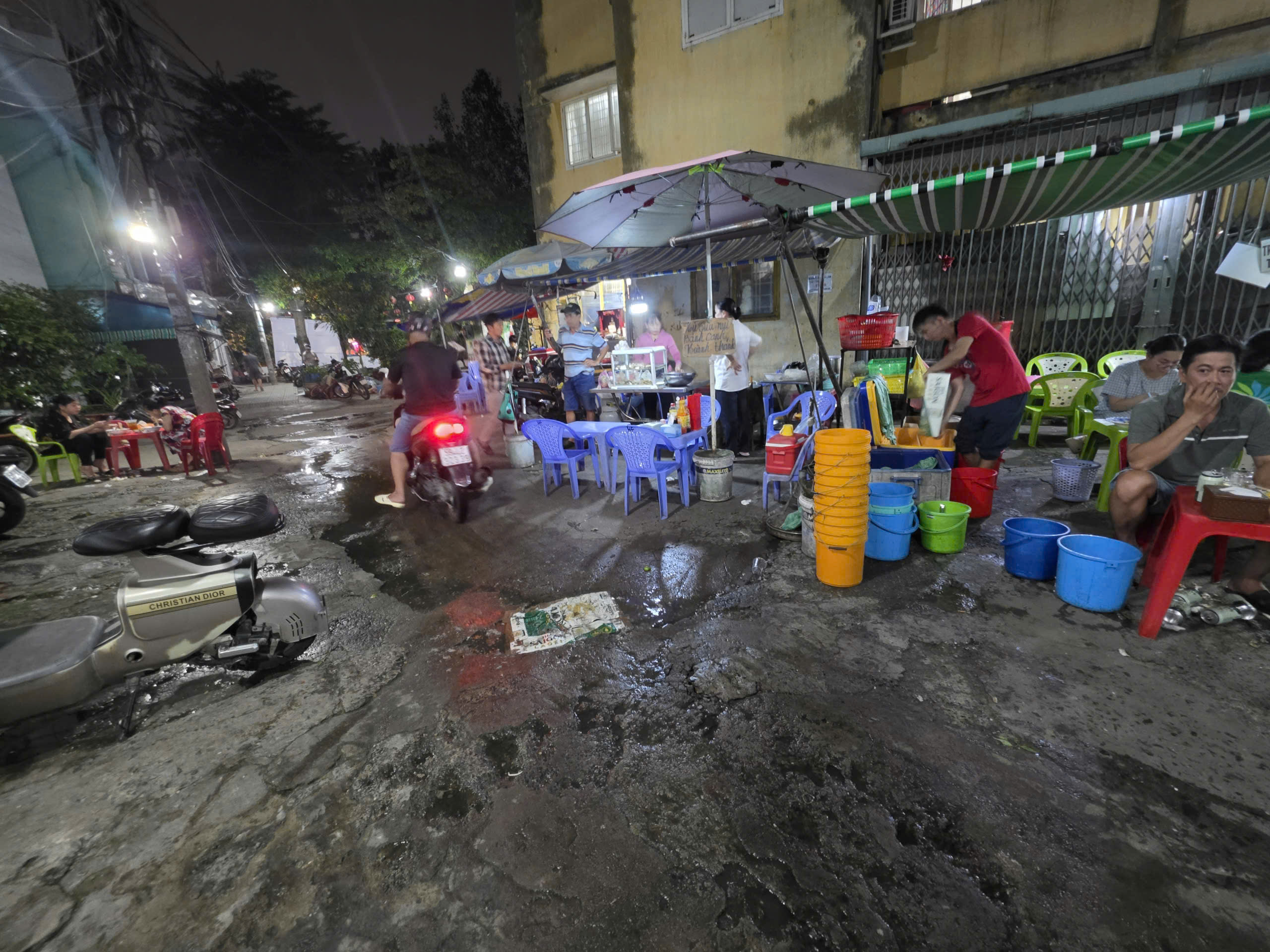
One evening in Vietnam, I found myself sitting at a small plastic table on the side of the street, surrounded by colorful plastic chairs, buckets, scooters, umbrellas, locals, and the sounds of a neighborhood winding down for the night.
This wasn't a fancy seafood restaurant.
It didn't need to be.
It was one of those wonderfully ordinary Vietnamese evenings where food, people, motorcycles, conversation, and street life all blend together.
Dinner Doesn't Always Look Like a Restaurant
In Vietnam, dinner doesn't always happen inside four walls. Some of the best meals take place directly on the sidewalk or along the edge of a neighborhood street, where the boundary between the dining room and the city quietly disappears.
The setup is simple and unapologetic: small plastic tables, low plastic chairs in bright blues and reds, a few umbrellas stretched overhead, and a food preparation area that's completely in the open. You can see the pots, the buckets, the cutting boards, and the person cooking your meal just a few steps away.
And all around you, life keeps happening. Scooters glide past within arm's reach. Pedestrians weave between the tables. A neighbor stops to chat with the vendor. Someone pulls up on a motorbike, orders without getting off, and rides away with a bag of food.
In Vietnam, the street itself becomes part of the dining room. The noise, the movement, the damp pavement — none of it is separate from the meal. It's all part of the same experience.
Then the Food Arrives
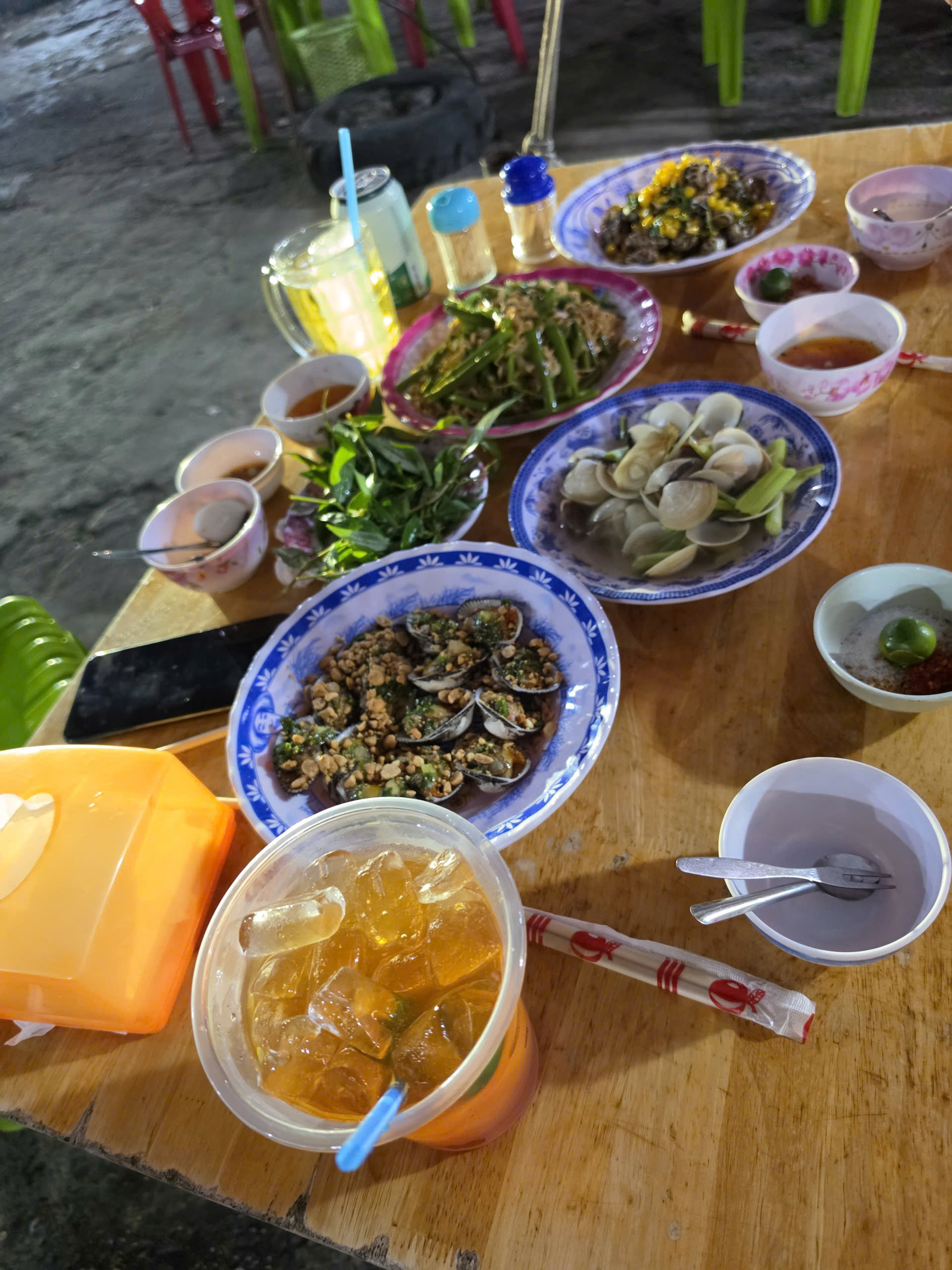
One of the great pleasures of eating seafood this way is the way the food arrives — not as one big entrée, but as a series of shared dishes that land on the table over the course of the meal.
Plates of shellfish, clams, and other seafood begin to appear. There are bowls of fresh herbs, small dishes of dipping sauces, crushed peanuts, greens, and seasonings. Each dish is its own little event, and together they turn the table into a colorful, shared spread.
This is one of the things I love about Vietnamese dining: you don't necessarily order one large plate for yourself. You order several dishes, and everyone at the table shares. It's social, unhurried, and it encourages you to try a little of everything.
The Drinks Are Part of the Experience
The drinks deserve a mention of their own. A cold drink arrives — often over ice, with a straw — and it becomes part of the rhythm of the meal. On a warm evening, that cold drink is half the experience.
And then there are the condiments. Small bowls of dipping sauces, slices of lime, chili, salt, and fresh herbs are all within reach. In Vietnam, you're encouraged to customize. You add a squeeze of lime here, a spoonful of chili there, a pinch of salt, a handful of herbs. You build the flavor you want, bite by bite.
It's a hands-on, personal way of eating that makes you feel involved in the meal rather than just served by it.
Don't Expect the Experience to Be Perfect
If you're used to restaurants where everything is polished and predictable, a Vietnamese street seafood dinner can take some adjusting. The pavement may be uneven. The street may still be wet from an earlier rain. The chairs are plastic, the furniture is mismatched, and buckets and cooking equipment sit out in the open. Scooters pass nearby, and there's a constant hum of noise and activity.
None of this is a negative. It's the atmosphere. It's the texture of the evening. It's what makes the meal feel real rather than staged.
That said, a little practical sense goes a long way. Pay attention to how the food is being handled. Notice whether the seafood is cooked properly and whether the stall has a steady turnover of customers — a good sign that the food is fresh. A busy stall is a positive signal, but it's not a guarantee. Use your judgment, and don't be afraid to walk past a place that doesn't look right.
Watch Where the Locals Eat
If you're trying Vietnamese street seafood for the first time, the best advice is simple: watch where the locals eat.
Look for places with a steady stream of local customers. Watch how the food is being prepared. Look for seafood that appears fresh and is cooked properly in front of you. Start with a few dishes before ordering more — you can always add to the order. Be willing to try unfamiliar foods, but carry some cash, because smaller street vendors often don't accept cards. And use common sense when it comes to food and water hygiene.
This Is One of the Reasons I Love Life in Vietnam
This is where the experience connects to something bigger.
Moving abroad isn't only about visas, apartments, banking, transportation, healthcare, and internet — though all of those things matter. It's also about the everyday experiences that, over time, make a foreign country start to feel like home.
An inexpensive, spontaneous seafood dinner on a neighborhood street can become one of the most memorable experiences of living in Vietnam. Not because it was fancy, but because it was real.
You don't need a reservation.
You don't need to dress up.
You don't need to spend a fortune.
You simply find a table, order some food, sit back and watch Vietnam happen around you.
A Few Tips for Your First Vietnamese Street Seafood Experience
- Look for local crowds. A steady flow of local customers is one of the best signs a stall is worth trying.
- Watch the food preparation. Seeing your meal cooked in front of you tells you a lot about freshness and cleanliness.
- Start small. Order a few dishes first. You can always add more once you know what you like.
- Expect to share. Vietnamese dining is built around shared plates, not individual entrées.
- Don't be afraid to point or ask what something is. Curiosity is welcomed, and pointing works when words don't.
- Keep some small cash available. Many street vendors don't accept cards.
- Bring an open mind. The best experiences often come from the dishes you didn't plan to order.
- Use common sense with food and water. Trust your instincts, and don't be afraid to pass on anything that doesn't look right.
The Remote Life Vietnam Connection
This is ultimately what Remote Life Vietnam is about.
It's not just about working from a laptop in another country.
It's about creating a lifestyle where your work gives you the freedom to experience the place you're living.
You finish a remote workday, step outside, walk a few blocks, and discover a neighborhood seafood stall you'd never have found as a tourist on a tight schedule. You sit down. You order. You eat. You watch. And somewhere in the middle of it, the city stops feeling foreign and starts feeling like yours.
That's not a promise that remote work will automatically give you financial freedom, or that moving to Vietnam is the right choice for everyone. It's an observation: when your work is flexible, the everyday life of a place becomes available to you in a way it never is on a two-week trip.
Looking for Your First Remote Job?
If reading about evenings like this makes you think about building a more flexible life of your own, there's a next step worth knowing about.
If you're new to remote work and don't know where to begin, Remote Freedom can help you start exploring the remote-work path. It's a remote-work searching service designed to help people who are trying to find remote work for the first time — without the guesswork and without the noise.
Work remotely. Live differently. Experience Vietnam.