
Key Takeaway
Do not assume a gold shop, jewelry store, hotel, or informal money changer is authorized to exchange foreign currency. Use a bank, licensed exchange counter, or ATM and verify the provider before handing over your money.
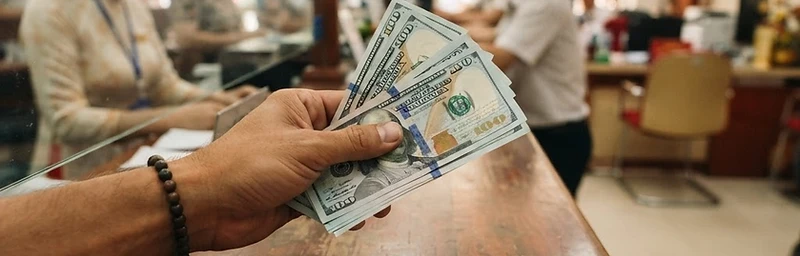
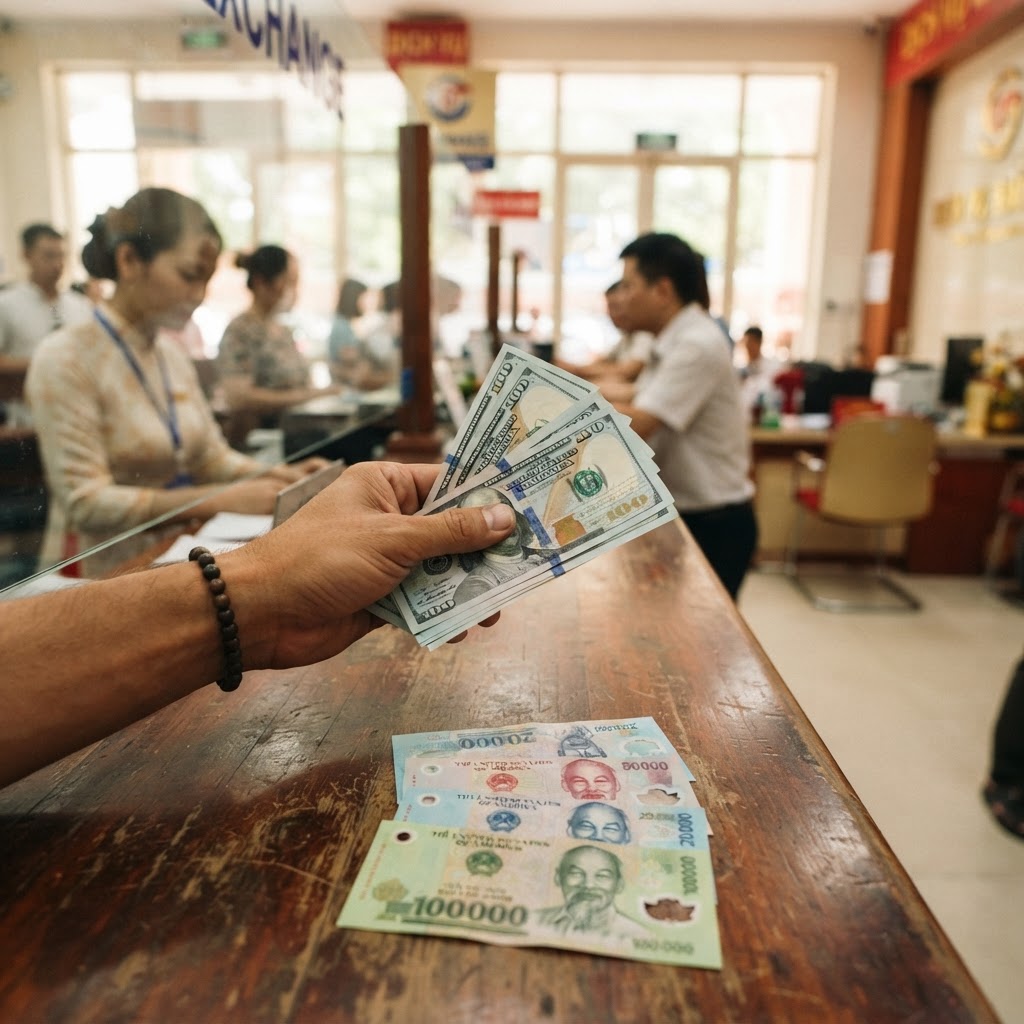
If you have visited Vietnam before, you may remember a time when exchanging U.S. dollars for Vietnamese dong was as simple as walking into a gold shop. Many travelers relied on gold shops, jewelry stores, and informal money changers for quick cash. That informal practice is no longer something travelers should assume is legal or available.
Since February 9, 2026, a new Vietnamese government decree has made the rules on foreign-currency exchange clearer and the penalties for unauthorized exchange more explicit. This article explains what changed, what it means for travelers and expats, and where you can legally exchange money in Vietnam.
The safest rule is simple: Do not assume a gold shop, jewelry store, hotel, street money changer, or other business is legally authorized to exchange foreign currency.
What Changed in Vietnam?
On February 9, 2026, Decree No. 340/2025/ND-CP took effect. This decree, issued by the Vietnamese government, specifies administrative penalties for violations in the monetary and banking sector, including gold trading and foreign-currency exchange.
The decree is designed to control unauthorized foreign-currency transactions and ensure that all currency exchange flows through licensed, regulated channels. Under Vietnamese law, the buying and selling of foreign currency must be conducted through credit institutions or other entities authorized by the State Bank of Vietnam (SBV).
Here is what the change means in practical terms:
- Foreign currency can only be exchanged at authorized places. A business must hold a specific license or authorization from the State Bank of Vietnam to exchange foreign currency.
- The informal gold-shop exchange practice is now treated as a violation. Gold shops and jewelry stores are not automatically licensed to exchange foreign currency. Exchanging money at an unauthorized location can result in penalties for both the business and the customer.
- Previously available does not mean currently authorized. The fact that a business exchanged money for you in the past does not mean it is currently authorized to do so.
Important: A business being willing to exchange your dollars does not automatically mean the business is authorized to perform foreign-currency exchange. Always verify that the location is licensed before handing over your cash.
According to reporting by Tuoi Tre (Youth) newspaper, reporters surveyed several gold and jewelry shops in Nha Trang and asked them to exchange foreign currency. Every shop declined, saying they were not authorized to provide the service. This is consistent with the decree's requirements: only licensed credit institutions and authorized exchange agents may conduct foreign-currency transactions.
What It Means for You
The practical consequences for travelers and expats depend on the amount of foreign currency involved and whether the exchange location is authorized.
Under Article 27 of Decree No. 340/2025/ND-CP, the following penalties apply to individuals who buy or sell foreign currency at unauthorized locations or between individuals:
| Transaction Amount (USD equivalent) | Penalty for Individuals |
|---|---|
| Under $1,000 | Warning (for a first offense) |
| $1,000 to under $10,000 | Fine of VND 10,000,000 to VND 20,000,000 (approximately $384 to $768) |
| $10,000 to under $100,000 | Fine of VND 20,000,000 to VND 30,000,000 |
| $100,000 or more | Fine of VND 80,000,000 to VND 100,000,000 and confiscation of the foreign currency involved |
Fines for organizations are twice the amounts listed above. Unlicensed organizations exchanging foreign currency face fines of up to VND 500 million (approximately $19,000), and unlawful foreign-currency payments can incur fines of up to VND 200 million (approximately $7,600).
A warning for a small first-offense exchange under $1,000 may sound minor, but it is still an administrative violation. Repeat or multiple offenses carry monetary fines even for amounts under $1,000.
Do Not Assume "Small Amount" Means "Legal"
- A warning is still a recorded administrative violation.
- Repeat offenses carry monetary fines even for small amounts.
- Foreign currency involved in a transaction of $100,000 or more may be confiscated.
- The safest option is to use an authorized foreign-currency exchange provider regardless of the amount.
Do not treat a penalty threshold as a safe amount to exchange illegally. The safest option is to use an authorized foreign-currency exchange provider regardless of the amount.
Where Can You Legally Exchange Money?
There are three main ways to obtain Vietnamese dong legally in Vietnam: commercial banks, licensed foreign-currency exchange counters, and ATMs.
1. Commercial Banks
Commercial banks are one of the safest choices for exchanging foreign currency. Major Vietnamese banks such as Vietcombank, BIDV, VietinBank, and Agribank commonly offer foreign-currency exchange, but not every branch necessarily provides the service.
When using a bank:
- Bring your passport or other required identification. Banks may require passports and additional paperwork.
- Check the bank's opening hours before visiting.
- Confirm whether that specific branch provides foreign-currency exchange. Not all branches do.
- Ask about the exchange rate and any applicable fees before completing the transaction.
- Count the Vietnamese dong before leaving the counter.
- Keep the transaction receipt. You may need it if you want to exchange dong back to foreign currency before leaving Vietnam.
Processing times and requirements vary by bank and branch. Do not assume that every branch of every Vietnamese bank handles foreign currency.
2. Licensed Foreign-Currency Exchange Counters
Licensed exchange counters may be available at airports, shopping centers, major hotels, tourist areas, and other officially authorized locations. These counters operate under authorization from the State Bank of Vietnam.
However, location alone does not prove authorization. A counter inside a hotel or tourist area is not automatically licensed simply because of where it is located.
How to Verify a Licensed Exchange Counter
A counter inside a hotel or tourist area is not automatically licensed simply because of where it is located. Ask whether the counter is authorized to exchange foreign currency, and look for visible evidence of a license or authorization from the State Bank of Vietnam.
If you are unsure whether a counter is licensed, use a bank or ATM instead.
Some hotels offer exchange services through authorized agents, meaning the hotel hosts a licensed exchange counter operated by an authorized third party. In this case, the exchange is legal, but the rates may be less favorable than at a bank. Always verify that the specific counter is authorized.
3. ATMs
ATMs can be one of the simplest ways to obtain Vietnamese dong, especially if your bank reimburses international ATM fees or offers a favorable exchange rate.
When using ATMs in Vietnam, keep the following in mind:
- ATM withdrawal fees: Vietnamese banks typically charge a fee per withdrawal. The fee is usually posted on the ATM screen before you confirm the transaction.
- Foreign transaction fees: Your home bank may charge a foreign transaction fee or international ATM fee. Check with your bank before traveling.
- Dynamic currency conversion (DCC): Some ATMs will offer to convert the transaction amount into your home currency (for example, U.S. dollars) instead of Vietnamese dong. This is called dynamic currency conversion, and it usually results in a less favorable exchange rate.
- Daily withdrawal limits: Vietnamese ATMs typically have per-transaction and daily withdrawal limits. You may need to make multiple withdrawals to access larger amounts.
- ATM availability: ATMs are widely available in cities and tourist areas but may be less common in rural regions.
- Use reputable bank-operated ATMs: When possible, use ATMs operated by major Vietnamese banks rather than standalone or unbranded machines.
Watch the ATM screen carefully. If the ATM offers to convert your withdrawal into your home currency (for example, "Convert to USD?"), decline the conversion and choose to be charged in Vietnamese dong. Accepting the conversion usually results in a worse exchange rate. Always review the exchange-rate option before pressing accept.
Can You Still Exchange Dollars at a Gold Shop in Vietnam?
Travelers should not assume that a gold or jewelry shop is authorized to exchange foreign currency. Under Vietnamese law, a gold or jewelry business and a licensed foreign-currency exchange location are not automatically the same thing.
A gold or jewelry business is licensed to buy, sell, and trade gold and jewelry. A licensed foreign-currency exchange location is specifically authorized by the State Bank of Vietnam to buy and sell foreign currency. These are separate types of authorization.
The fact that some gold shops may have exchanged currency informally in the past does not mean they were ever legally authorized to do so. Under Decree No. 340/2025/ND-CP, exchanging foreign currency at an unauthorized location, including a gold shop, is an administrative violation.
| Business Type | Automatically Authorized to Exchange Currency? |
|---|---|
| Gold shop | No |
| Jewelry store | No |
| Hotel | No, unless it hosts a separately licensed exchange counter |
| Bank | Verify that the specific branch provides the service |
| Licensed exchange counter | Yes, within the scope of its authorization |
| ATM | Provides cash withdrawal rather than traditional cash exchange |
Before You Exchange Your Money
Use this practical checklist before handing over your cash at any exchange location:
- Ask whether the location is licensed to exchange foreign currency.
- Confirm the current exchange rate.
- Ask whether there are fees or commissions.
- Confirm exactly how many Vietnamese dong you will receive.
- Count your money before leaving the counter.
- Request and keep your receipt.
- Do not hand cash to an individual offering an unofficial exchange.
- If something feels unclear, use a bank or ATM instead.
Gold Shops vs. Banks vs. Licensed Exchange Counters vs. ATMs
The table below compares the main options for obtaining Vietnamese dong. Rates and fees vary by provider, location, and market conditions. No single option always offers the best exchange rate.
| Option | Legal / Safety Considerations | Convenience | Exchange Rate Considerations | What to Bring |
|---|---|---|---|---|
| Commercial bank | Authorized; safest option | Limited by branch hours and locations | Generally competitive; ask about fees | Passport; possibly additional paperwork |
| Licensed exchange counter | Authorized if licensed by SBV; verify before using | Often found at airports, malls, and tourist areas | Varies; compare rates and fees | Passport recommended |
| Airport exchange counter | Authorized if licensed; verify | Very convenient on arrival | May be less competitive than banks | Passport |
| Hotel exchange counter | Only legal if the counter is separately licensed | Very convenient for guests | May be less competitive; compare the final amount | Passport; room key |
| ATM | Safe; use reputable bank-operated machines | Widely available in cities and tourist areas | Watch for ATM fees, foreign transaction fees, and DCC | Debit or ATM card; 4-digit PIN |
| Gold / jewelry shop | Not authorized to exchange currency; penalties apply | Not a legal option | N/A | N/A |
| Street / informal money changer | Not authorized; penalties apply; risk of counterfeit or scams | Not a legal option | N/A | N/A |
Hotel Currency Exchange
Hotel exchange counters can be convenient when you need cash immediately, but convenience may come with a less competitive exchange rate. Some hotels offer exchange services through authorized agents, meaning the hotel hosts a licensed exchange counter operated by an authorized third party. In this case, the exchange is legal.
The key issue is whether the specific counter is authorized, not simply that it is located inside a hotel. Always verify that the counter is licensed, and compare the final amount of Vietnamese dong you will receive rather than focusing only on the advertised rate.
5 Ways to Avoid Foreign-Currency Exchange Problems in Vietnam
- Use authorized providers. Banks, licensed exchange counters, and ATMs are your safest options.
- Verify the exchange location before handing over cash. Ask whether the counter is licensed and look for evidence of authorization.
- Do not use random individuals offering better rates. Street money changers are not authorized and may expose you to penalties, counterfeit currency, or scams.
- Count your money before leaving the counter. Mistakes happen, and it is much harder to resolve a discrepancy after you have walked away.
- Keep your receipt. You may need it to exchange dong back to foreign currency before leaving Vietnam.
If someone approaches you on the street and offers an unusually attractive exchange rate, walk away and use an authorized provider instead. Street money changers are not authorized under Vietnamese law, and the rate they offer is not worth the legal and financial risk.
Bank
Authorized and regulated. Bring your passport. Confirm the branch offers currency exchange.
Licensed Exchange Counter
Found at airports, malls, and tourist areas. Verify the counter is licensed by the SBV.
ATM
Widely available. Decline dynamic currency conversion. Use reputable bank ATMs.
Authorized Hotel Exchange
Convenient but verify the counter is separately licensed. Rates may be less favorable.
Unauthorized Money Changer
Not legal. Penalties apply. Includes gold shops, street changers, and informal dealers.
Gold / Jewelry Shop
Licensed to trade gold and jewelry.
Not authorized to exchange foreign currency.
Exchanging money here is an administrative violation under Decree 340/2025/ND-CP.
Licensed Currency Exchange
Specifically authorized by the State Bank of Vietnam.
Authorized to exchange foreign currency.
Includes banks and licensed exchange counters at airports, malls, and authorized hotels.
Before You Exchange Money
Frequently Asked Questions
Can I still exchange U.S. dollars at gold shops in Vietnam?
No. Gold shops and jewelry stores are not authorized to exchange foreign currency. Under Decree No. 340/2025/ND-CP, which took effect on February 9, 2026, exchanging foreign currency at an unauthorized location is an administrative violation. Reporters from Tuoi Tre newspaper surveyed gold and jewelry shops in Nha Trang, and every shop declined to exchange foreign currency, citing lack of authorization.
Is it legal to exchange dollars at an unauthorized money changer in Vietnam?
No. Buying or selling foreign currency at an unlicensed location or between individuals is an administrative violation under Article 27 of Decree No. 340/2025/ND-CP. Penalties range from a warning for small first-offense transactions under $1,000 to fines of VND 80,000,000 to VND 100,000,000 and confiscation of the foreign currency for transactions of $100,000 or more.
Where can tourists legally exchange U.S. dollars in Vietnam?
Tourists can legally exchange foreign currency at commercial banks (such as Vietcombank, BIDV, VietinBank, and Agribank) and licensed foreign-currency exchange counters located at airports, shopping centers, major hotels, and tourist areas. Always verify that the specific branch or counter is authorized before exchanging money.
Do I need my passport to exchange money in Vietnam?
Identification requirements vary depending on the transaction and the provider. Banks typically require a passport and may request additional paperwork. Licensed exchange counters may also ask for identification. It is strongly recommended to bring your passport when exchanging money in Vietnam, as it is the most widely accepted form of identification for foreigners.
Can I use an ATM to get Vietnamese dong?
Yes. ATMs are widely available in Vietnamese cities and tourist areas. When using an ATM, watch for withdrawal fees, foreign transaction fees from your home bank, and dynamic currency conversion (DCC). If the ATM offers to convert your withdrawal into your home currency, decline and choose Vietnamese dong to get a better rate. Use ATMs operated by major Vietnamese banks when possible.
Are hotel currency exchange counters legal in Vietnam?
A hotel exchange counter is legal only if the specific counter is licensed to exchange foreign currency. Some hotels host exchange counters operated by authorized agents, which are legal. The key issue is whether the counter is authorized, not simply that it is located inside a hotel. Always verify that the counter is licensed before exchanging money.
Should I exchange all my U.S. dollars when I arrive in Vietnam?
There is no single rule that works for every traveler. Some travelers prefer to exchange a small amount on arrival for immediate expenses and use ATMs or banks for larger amounts later. Others prefer to use ATMs exclusively. The most important principle is to use authorized providers regardless of the amount. Do not exchange more than you need at a single location, and always keep your receipts.
What happens if I exchange money at an unauthorized location in Vietnam?
Under Decree No. 340/2025/ND-CP, exchanging foreign currency at an unauthorized location can result in a warning for small first-offense transactions under $1,000, fines of VND 10,000,000 to VND 100,000,000 for larger transactions, and confiscation of the foreign currency for transactions of $100,000 or more. The safest option is to use an authorized provider regardless of the amount.
Related Resources
For more information about managing money in Vietnam, check out these Remote Life Vietnam guides:
- International Money Transfers Guide — Compare money transfer services for sending and receiving funds in Vietnam.
- International Banking Guide — Learn about U.S. bank accounts, ATM strategy, and international banking for expats.
- Essential Apps for Vietnam — The must-have apps for living, traveling, and getting around Vietnam, including payment apps.
- Staying Safe in Vietnam — Practical safety advice for travelers and expats.
- Essential Apps for Vietnam: Full Guide — Detailed guide to payment, transport, and communication apps.
- How to Navigate the Streets in Vietnam — A practical guide for getting around safely.
Stay Updated on Life in Vietnam
Vietnam's rules and regulations change. For clear, practical updates about currency exchange, banking, and everyday life in Vietnam, follow IzyViet for straightforward information that helps you make informed decisions.
Sources: Decree No. 340/2025/ND-CP (effective February 9, 2026); LuatVietnam; Tuoi Tre News; VietnamPlus (VNA); Bao Chinh Phu (Government Portal). This article is provided for educational purposes only and does not constitute legal, financial, or tax advice. Always verify current requirements with official sources.