

I recently watched Trại Buôn Người (The Journey of Heroes), the Vietnamese action-thriller directed by Toni Dương Bảo Anh that opened in theaters on September 25, 2026. It is a tense, well-made film about human trafficking, deception, and people trapped inside a criminal operation. I left the cinema thinking about the characters' choices — and then, like I tend to do, I started thinking about my own.
I have lived and traveled in Vietnam long enough to know that this is, by and large, a safe and welcoming country. This article is not an argument that Vietnam is dangerous, and it is certainly not a suggestion that Vietnamese people are untrustworthy. The vast majority of interactions I have had here have been honest, kind, and unremarkable in the best way.
What the movie did prompt me to do is think about how travelers, digital nomads, and expats can reduce unnecessary risks by making thoughtful decisions about transportation, services, personal information, and interactions with strangers. These are habits that make sense anywhere in the world — they just happen to be easy to practice in Vietnam, where good tools are readily available.
Key Takeaways
- When a legitimate transportation app is available, there is little reason to accept an unsolicited ride from a stranger who approaches you.
- Apps like Grab, Be, and Xanh SM add a layer of accountability: driver identity, vehicle details, trip records, and in-app payment.
- Apps are a risk-reduction tool, not a guarantee of safety — stay alert even when using them.
- Protect your identity as carefully as your physical safety. Don't hand strangers your passport, visa, address, or banking details without a legitimate reason.
- One red flag doesn't prove bad intent. The goal is to pause, assess, and choose the safer alternative.
- Vietnam is generally safe for travelers who use ordinary common sense and established services.
About the Film: Trại Buôn Người (The Journey of Heroes)
Before getting into the safety discussion, a quick note on the film itself. Trại Buôn Người (English title: The Journey of Heroes) is a Vietnamese action-thriller directed by Toni Dương Bảo Anh, with Mèo Bích Trang as author, producer, and creative director. It was produced by Chói Entertainment and released in Vietnamese cinemas on September 25, 2026. The film runs about 135 minutes and is rated T18 (restricted to viewers 18 and older).
The story follows a character named Ny, played by Steven Nguyễn, who tries to rescue his sister after she falls into a trafficking operation near the border. He and a friend are themselves captured and forced into labor inside a sprawling criminal compound, where they work with undercover agents and other victims to plan an escape. The cast also includes Quách Ngọc Ngoan, Huỳnh Minh Kiên, and a large ensemble of veteran and newcomer actors.
Everything described in the film is a fictionalized story. It is inspired by real-world concerns about human trafficking, but the specific events, characters, and compound depicted are dramatized for cinema. This article uses the movie only as a starting point for a broader conversation about personal safety — it does not describe real events, and it does not claim that ordinary transportation in Vietnam resembles anything in the film.

When a Ride App Exists, You Don't Need a Stranger's Ride
The central idea I took away from the film is simple, and it has nothing to do with Vietnam specifically: when transportation and other services are readily available through established apps and legitimate businesses, there is little reason to accept transportation or services from a random person who approaches you and offers them.
This isn't about assuming the stranger is dangerous. It's about recognizing that you have a better option — one that gives you information and accountability that a random curb-side offer simply cannot match.
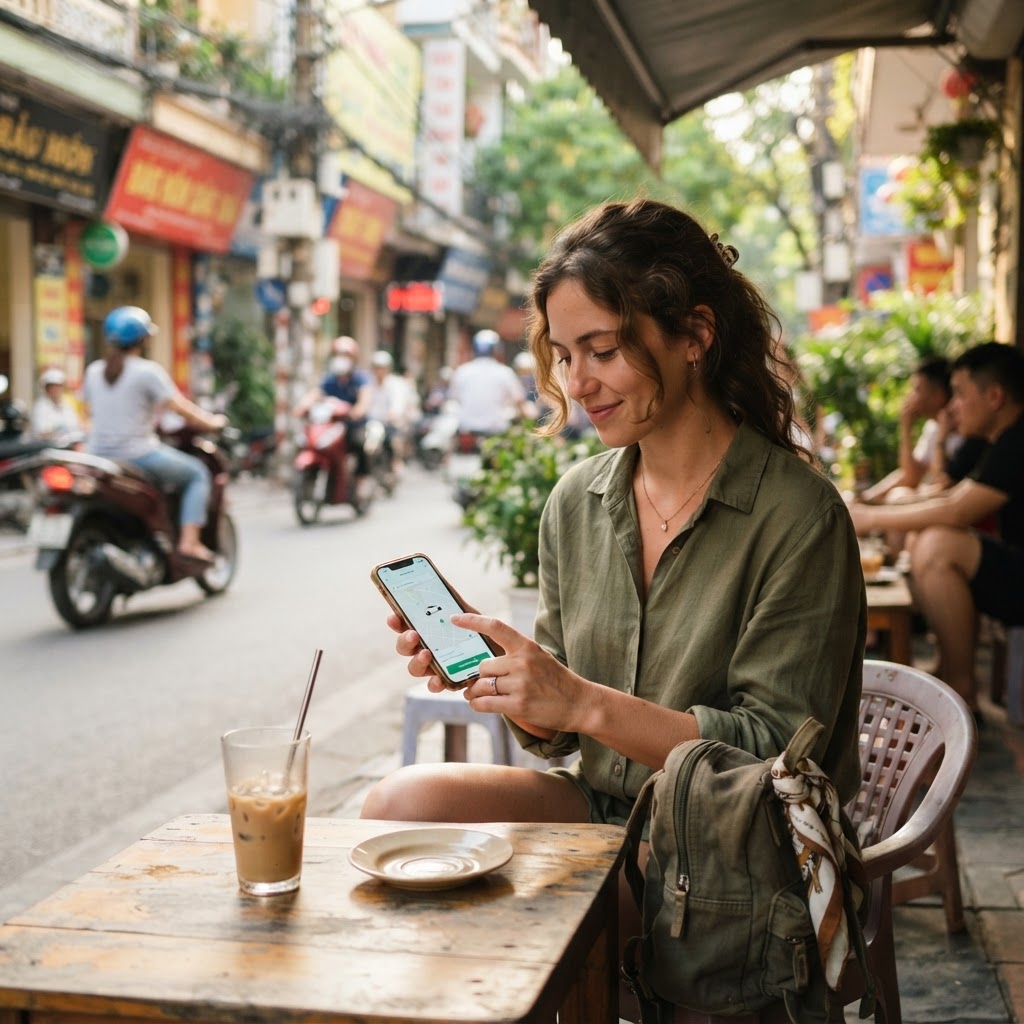
Using an established transportation app can provide several layers of useful information:
- Driver or provider identity — name, photo, and rating visible before you get in.
- Vehicle information — make, color, and license plate number.
- Trip records — a logged history of the route, time, and driver.
- Digital receipts — proof of the transaction and the amount paid.
- Pickup and destination details — the route and endpoints are recorded in the app.
- Trip sharing — the ability to send your trip details to a friend or family member.
- In-app communication — you can message or call the driver without revealing your personal phone number.
- A record of the transaction — payment, driver, and route are all tied to your account.
I want to be clear about one thing: using an app does not make you completely safe. Apps are a risk-reduction tool, not a guarantee of safety. You still need to verify the vehicle, confirm the driver, and pay attention to your surroundings. But the difference between a random stranger's offer and an app-based ride is that the app leaves a trail — and that trail itself discourages bad behavior and gives you something to act on if something goes wrong.
Protect Your Identity Just as Carefully as Your Physical Safety
Personal safety isn't only about physical safety. After watching the film, I realized I had been thinking mostly about the physical risks — getting into the wrong vehicle, going to the wrong place. But some of the most damaging things that can happen to a traveler don't involve anyone laying a hand on them at all.
Identity safety and information security matter just as much. Travelers should be cautious about unnecessarily providing strangers with sensitive personal information, including:
- Your full name
- Passport information or passport photographs
- Visa information
- Your hotel or residential address
- Your phone number
- Your personal email address
- Banking information
- Credit-card information
- Copies of identification documents
- Your travel itinerary
- Any other sensitive personal information
A person does not need to physically harm you to create a serious problem. Obtaining your personal information can potentially lead to identity theft, fraud, impersonation, harassment, or other forms of abuse — and for a traveler far from home, untangling that kind of mess can be expensive, time-consuming, and stressful.
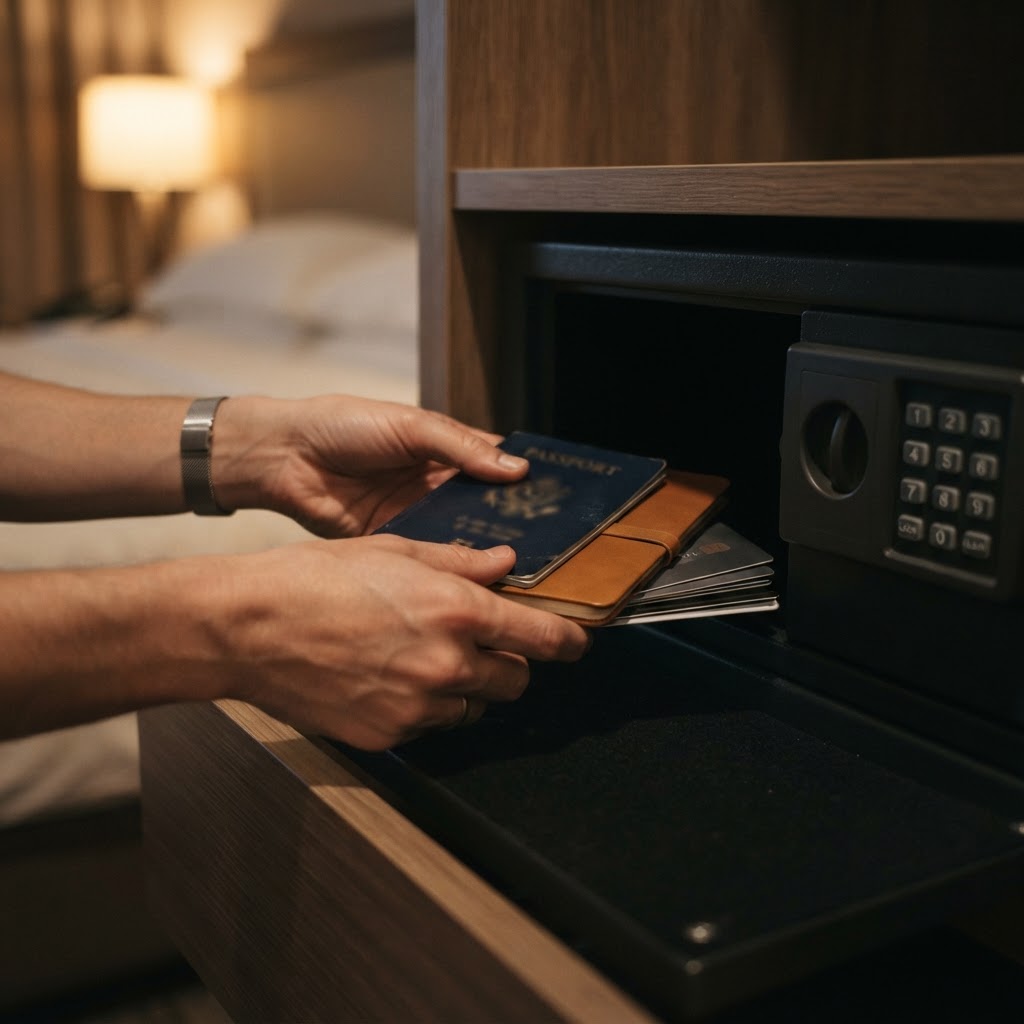
The principle I try to follow is this: protect your identity just as carefully as you protect your physical safety. Your passport is not a conversation piece. Your address is not small talk. If someone genuinely needs a piece of information — a hotel checking you in, a bank opening an account — that's one thing. If a friendly stranger is just curious, a polite non-answer is perfectly fine.
Use Established Transportation Services in Vietnam
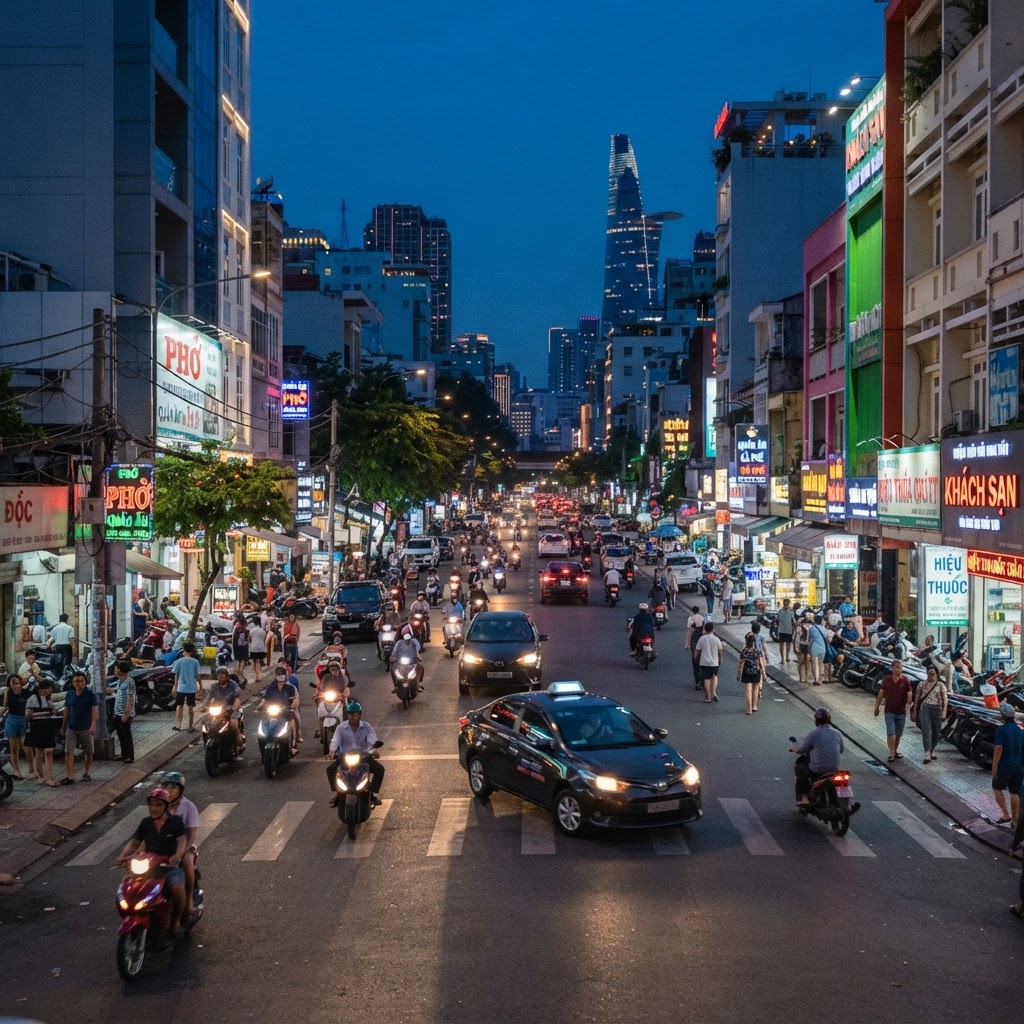
In practical terms, visitors and expats in Vietnam should generally consider established transportation services and applications rather than accepting unsolicited rides from strangers. The point is not that every independent driver is dangerous — most are honest people earning a living. The point is that using a known and traceable service reduces unnecessary uncertainty, and in Vietnam that option is almost always available.
Several legitimate app-based transportation services are commonly used in Vietnam. Availability can vary by city and service, and features change over time, so always check the current app for coverage in your area.
Common App-Based Transportation Services in Vietnam
- Grab — The most widely used ride-hailing app in Southeast Asia, available in most major Vietnamese cities. Offers car and motorbike options, in-app payment, driver ratings, and trip sharing.
- Be — A Vietnam-based ride-hailing platform offering car and motorbike rides, delivery, and in-app payment in many cities.
- Xanh SM — A newer Vietnamese electric taxi service (operated by GSM) focused on clean-energy cars, available in major cities and expanding.
Beyond apps, legitimate taxis from established companies with meters and clear branding are also a reasonable option in most cities. The key distinction I look for is simple: is this ride traceable? If the answer is yes — through an app, a meter, a company name, or a receipt — I have a meaningful layer of accountability. If the answer is no, and a traceable option is available, I'll choose the traceable one.
Red Flags to Watch For
Not every uncomfortable interaction is a sign of danger. But certain patterns are worth noticing. The purpose of recognizing these signs is not to panic — it's to encourage you to pause, assess the situation, and choose a safer alternative.
Watch for these warning signs:
- Someone aggressively offering transportation after you have already declined.
- Someone asking you to leave an established transportation service and use their private vehicle instead.
- Someone requesting sensitive personal information without a legitimate reason.
- Someone asking to see or photograph your passport unnecessarily.
- Someone insisting that you change your destination.
- Someone pressuring you to get into a vehicle immediately, without giving you time to think.
- Someone offering an unusually cheap service while actively discouraging you from using an established service.
- Someone asking for payment outside the normal in-app or metered payment system.
- Someone becoming hostile, insulting, or threatening when you decline their offer.
One warning sign on its own does not automatically mean someone has criminal intentions. A driver who is pushy might simply be having a bad day. A person who asks an overly personal question might just be curious. The goal is not to convict anyone in your head — it's to notice when a situation feels off, and to give yourself permission to step back and choose the option that leaves a record.
Practical Safety Checklist Before Getting Into a Vehicle
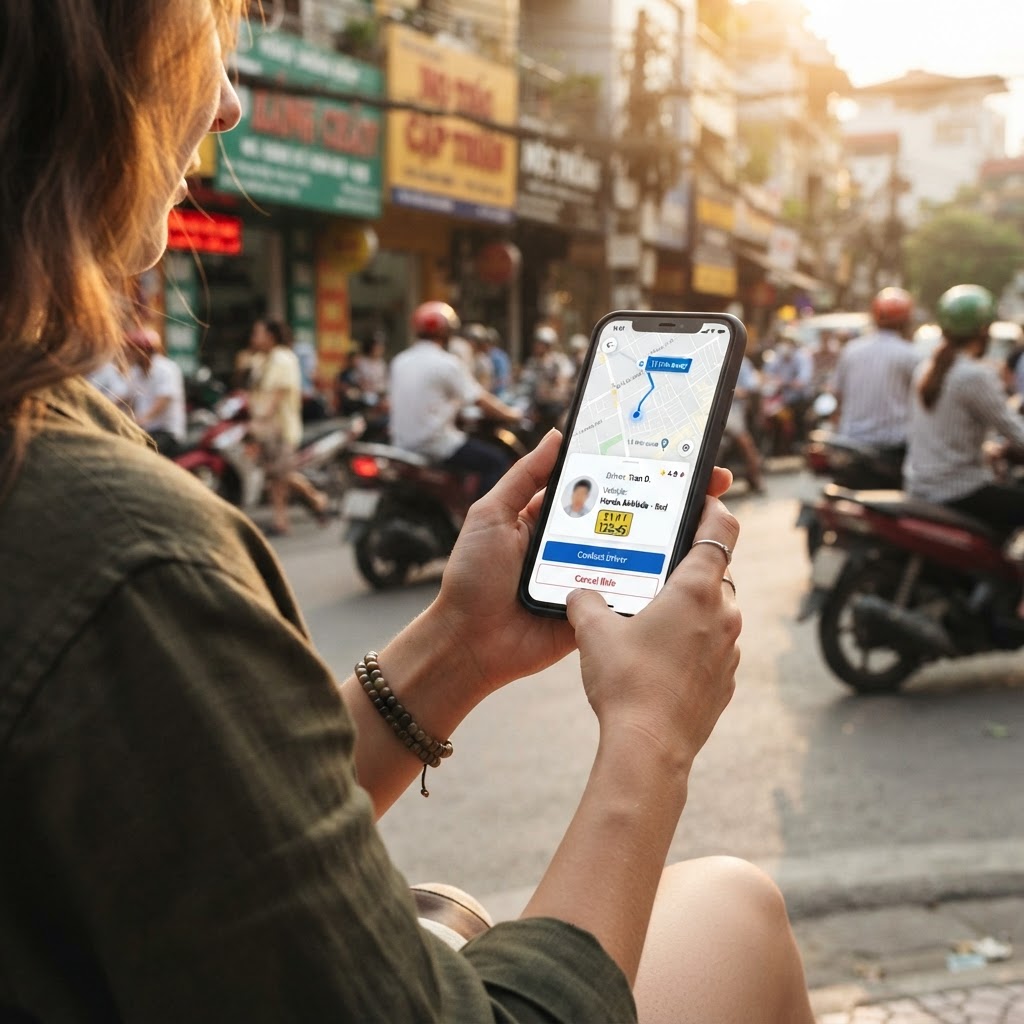
Here is a simple, scannable checklist I run through before I get into any app-based ride. It takes a few seconds and has become second nature.
Before getting into a vehicle:
- Verify the vehicle. Confirm the license plate, make, and color match what the app shows.
- Verify the driver's identity when the service provides driver information. Match the photo and name.
- Confirm the destination. Make sure the driver knows where you are going and that it matches your app.
- Make sure the trip matches what appears in the app. If the driver suggests a different route, a different car, or an off-app arrangement, that's a reason to decline.
- Share trip information with someone you trust when appropriate, especially at night or on longer trips.
- Keep your phone accessible and charged. It is your map, your record, and your way to call for help.
- Avoid providing unnecessary personal information. Friendly conversation does not require your home address or passport number.
- Do not allow yourself to be pressured into changing transportation arrangements once you have made a decision.
- If something feels wrong, leave the situation and seek assistance. Trust your instincts — you are never obligated to get into a vehicle that does not feel right.
Good Safety Habits Are Useful Anywhere in the World
I want to repeat this, because it matters: good safety habits are useful anywhere in the world. Using established services is not a Vietnam-specific precaution born from fear. It is the same logic I would apply in my home city in the United States, in Europe, or anywhere else.
Using an established service is about reducing unnecessary risk and maintaining control over your transportation and your personal information. It is not about distrusting the country you are visiting or the people who live in it.
You don't have to assume that everyone offering you a ride is dangerous. You simply don't need to take the risk when a verified transportation option is readily available.
Vietnam is, in my experience, a genuinely safe and hospitable country to travel and live in. The people here have been warm, helpful, and honest with me. Practicing basic safety habits is not a comment on Vietnam — it is a comment on how I prefer to move through the world.
Understanding Human Trafficking Awareness
Because the film deals with human trafficking, it is worth briefly explaining what trafficking actually is, separate from the dramatized version on screen.
Human trafficking involves the use of deception, coercion, or exploitation to control another person for forced labor, sexual exploitation, or other forms of abuse. It often targets people in vulnerable situations — those without money, documents, support networks, or safe options. Traffickers frequently use the appearance of a legitimate opportunity — a job offer, a ride, a place to stay, a favor — to gain trust before exploiting that trust.
That is exactly why the everyday habits in this article matter. The same principles that help any traveler avoid unnecessary risk — using traceable services, protecting personal information, and being cautious about unsolicited offers — are the principles that make it harder for anyone, anywhere, to exploit a moment of confusion or vulnerability.
I want to be clear: this article does not suggest that ordinary taxi drivers, ride-hailing drivers, or Vietnamese businesses are associated with trafficking. There is no basis for such a claim, and making it would be both unfair and inaccurate. The film is a fictionalized story. The safety lessons here are broad travel-safety principles that apply to anyone, anywhere.
For authoritative, real-world information on human trafficking and how to report it, the U.S. Department of State's Office to Monitor and Combat Trafficking in Persons and the U.S. Department of State travel site are good starting points.
Use Technology to Your Advantage
Here is the practical message I want to leave you with: use technology to your advantage.
The Takeaway
- When an established transportation app is available, use it.
- When a legitimate business is available, use it.
- When someone asks for personal information, consider whether they actually need it.
- Protect your identity as carefully as you protect your physical safety.
- Recognize red flags not as proof of danger, but as a signal to pause and choose the safer option.
The goal is not to live in fear. The goal is to make simple decisions that reduce unnecessary risk — so you can actually enjoy the country you came to experience. Vietnam rewards travelers who are open, curious, and present. A few basic habits simply help you stay that way.
Here is the line I keep coming back to:
You can't eliminate every risk while traveling, but you can avoid creating unnecessary ones.
For more practical guidance on living and traveling in Vietnam, see our airport arrival safety guide, our essential apps for Vietnam, our city comparison for expats, and the full Remote Life Vietnam resource library.
Frequently Asked Questions
Is Vietnam safe for travelers?
Yes, Vietnam is generally considered a safe country for travelers, digital nomads, and expats. Violent crime against visitors is rare, and most people you encounter will be honest and helpful. As anywhere, the riskiest situations usually involve transportation, valuables, and personal information — and those risks are easy to reduce with ordinary common sense and established services.
What is the safest way to get transportation in Vietnam?
The safest way to get around is to use established, traceable transportation: ride-hailing apps like Grab, Be, or Xanh SM, or clearly branded metered taxis from established companies. These services record the driver, vehicle, route, and payment, which creates accountability that an unsolicited curb-side offer does not.
Should I accept a ride from a stranger in Vietnam?
There is usually no reason to. When a legitimate app or established taxi is available, accepting an unsolicited ride from a stranger adds unnecessary uncertainty with no real benefit. You don't need to assume the person is dangerous — you simply don't need to take the risk when a verified option is readily available.
Why should travelers use transportation apps?
Transportation apps provide layers of accountability: driver identity and photo, vehicle make and license plate, a logged route, digital receipts, in-app communication that hides your phone number, and the ability to share your trip with someone you trust. Apps are a risk-reduction tool, not a guarantee of safety, so you should still verify the vehicle and driver and stay alert.
How can travelers protect their identity in Vietnam?
Treat your identity the way you treat your physical safety. Don't hand strangers your passport, visa, hotel address, phone number, email, banking, or credit-card details without a legitimate reason. Store sensitive documents in a hotel safe, use in-app communication instead of sharing your personal number, and politely decline requests for personal information that aren't necessary.
What personal information should I avoid giving strangers?
Avoid sharing your full name, passport information or photos, visa details, hotel or home address, phone number, personal email, banking information, credit-card numbers, copies of ID documents, and your travel itinerary. A person doesn't need to harm you physically to cause serious problems — identity theft, fraud, and harassment can all begin with a leaked document or address.
Disclaimer: This article provides general travel-safety information inspired by a film and is for educational purposes only. It is not a substitute for official emergency or law-enforcement guidance. If you are in immediate danger in Vietnam, call the local emergency number 113 (police). For official travel guidance, consult the U.S. Department of State and the U.S. Embassy in Vietnam.
Stay Safe and Travel Well in Vietnam
Explore our airport arrival safety guide, essential apps for Vietnam, and the full Remote Life Vietnam resource library for more practical, experience-based guidance on living and traveling in Southeast Asia.