

Quick Answer: How Can I Tell If an Online Job in Vietnam Is a Scam?
An online job is more likely to be a scam when it promises unusually high pay for little work, requires an upfront payment, asks for sensitive information before legitimate verification, or cannot be independently confirmed through the employer's official channels. Vietnamese authorities have repeatedly warned about recruitment scams using promises of "easy work, high pay" (việc nhẹ, lương cao), fake online tasks, and fraudulent overseas employment.
Vietnam has legitimate employers, legitimate remote jobs, legitimate recruitment agencies, and legitimate overseas employment opportunities. Millions of Vietnamese professionals work online, freelance, and remotely, both within Vietnam and internationally. The goal of this guide is not to create fear, but to teach you how to distinguish a genuine opportunity from a fraudulent one.
This article focuses specifically on scams that Vietnamese job seekers are actually likely to encounter, on the platforms they actually use: Facebook, Zalo, TikTok, Messenger, WhatsApp, Telegram, SMS, email, and online job boards. If you are looking for online jobs, remote jobs, work-from-home jobs, freelance work, part-time online work, side hustles, digital jobs, customer-service jobs, data-entry jobs, online assistant jobs, international jobs, or jobs in Vietnam or overseas, this guide will help you protect yourself.
Why Scammers Move Conversations to Private Messaging
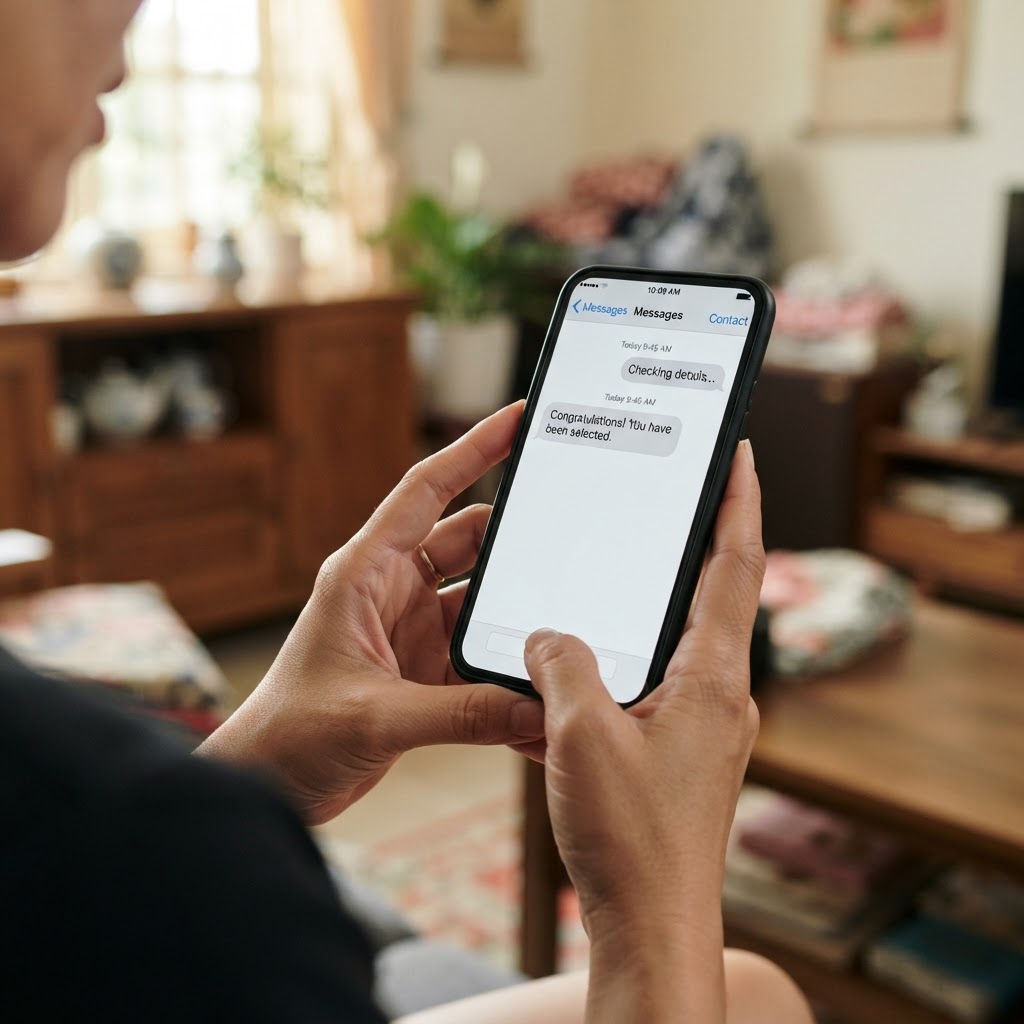
One of the most common techniques used by scammers is moving a conversation from a public platform to private messaging. A job posting may appear in a Facebook group, on TikTok, or on a public job board. Once you show interest, the recruiter quickly suggests moving to Zalo, WhatsApp, Telegram, or Signal for a "more detailed conversation."
This is not automatically proof of a scam. Legitimate recruiters also use private messaging. However, moving to a private channel reduces outside scrutiny. It becomes harder for you to check whether other people have been contacted the same way, whether the recruiter's profile is genuine, or whether others have already reported the offer as fraudulent. Always verify the employer independently, no matter which platform the recruiter uses to contact you.
"Việc nhẹ, lương cao": The Most Common Warning Sign in Vietnam
Vietnamese authorities have specifically warned about online job scams involving advertisements promising:
Advertisements promising easy work, a high salary, no experience needed, no qualifications required, immediate hiring, free transportation, free accommodation, or fast overseas placement should all be treated with caution. Vietnamese authorities have warned about fake online jobs and task-based employment scams involving promises of easy work and high income, including schemes requiring victims to pay money or invest funds.
"Việc nhẹ, lương cao" is not automatically proof of a scam. Some legitimate jobs do offer good pay for work that is not physically demanding. However, an offer for unusually easy work with unusually high pay deserves independent verification before you provide money, personal information, documents, or travel anywhere.
The danger is not the phrase itself. The danger is the combination: easy work, high pay, no experience, immediate start, and a request for money, documents, or travel. When several of these appear together, the risk increases significantly.
Fake Online Task Jobs: How a Small Task Becomes a Large Loss
Vietnamese authorities have specifically warned about fake recruitment for online collaborators and e-commerce "task" schemes. These scams often begin with a small, simple task that actually pays a small amount of money, building trust before the larger trap is sprung.
Common task-scam formats include:
- Product rating or product boosting
- Online "orders" or order optimisation
- Increasing sales figures for a shop
- Liking videos or following social-media accounts
- Completing simple tasks for a commission
- "Optimisation" work
- "E-commerce assistant" or "online collaborator" jobs
The scam typically works in stages. First, you complete a small task and receive a small payment, which makes the offer seem genuine. Next, you are offered larger tasks with higher promised returns. Then you are told you must deposit money to unlock higher-tier tasks or withdraw your earnings. The deposit grows. Eventually, you cannot withdraw your money at all.
If you are ever asked to deposit money in order to withdraw money you have already earned, stop immediately. No legitimate employer requires you to pay to access your own earnings.
Fake E-Commerce Jobs: When Scammers Impersonate Major Platforms
Vietnam's cybersecurity authorities have warned about fake recruitment messages impersonating e-commerce platforms. Scammers may claim to represent well-known e-commerce companies and tell you that the company needs people to complete online tasks such as product rating, order boosting, or sales optimisation.
Important: This does not mean that a particular e-commerce platform is conducting scams. It means that scammers may impersonate well-known companies or falsely claim that the company needs people to complete online tasks. A legitimate e-commerce company will have an official careers page, a verifiable company address, and a formal recruitment process. If someone claims to recruit for a major platform but contacts you only through Zalo or Telegram and asks you to deposit money, that is a serious warning sign.
Fake Recruiters on Facebook and Zalo
Scammers can join employment groups on Facebook, create fake recruitment pages, post attractive jobs, and then contact applicants privately. A common pattern works like this:
- The scammer joins a Facebook employment group or creates a fake recruitment page.
- They post an attractive job with a high salary and easy requirements.
- When you express interest, they contact you privately.
- They suggest moving the conversation to Zalo or another messaging service.
- They request personal information, photographs, or documents.
- They request a deposit, training fee, or equipment fee.
- They may arrange a meeting at a location they control.
Being contacted through Facebook or Zalo does not prove that the recruiter is legitimate. A Facebook profile, a Zalo account, or a LinkedIn profile is not proof of employment. You must verify the employer independently.
Never Hand Over Your CCCD, Passport, or Personal Documents to an Unverified Recruiter
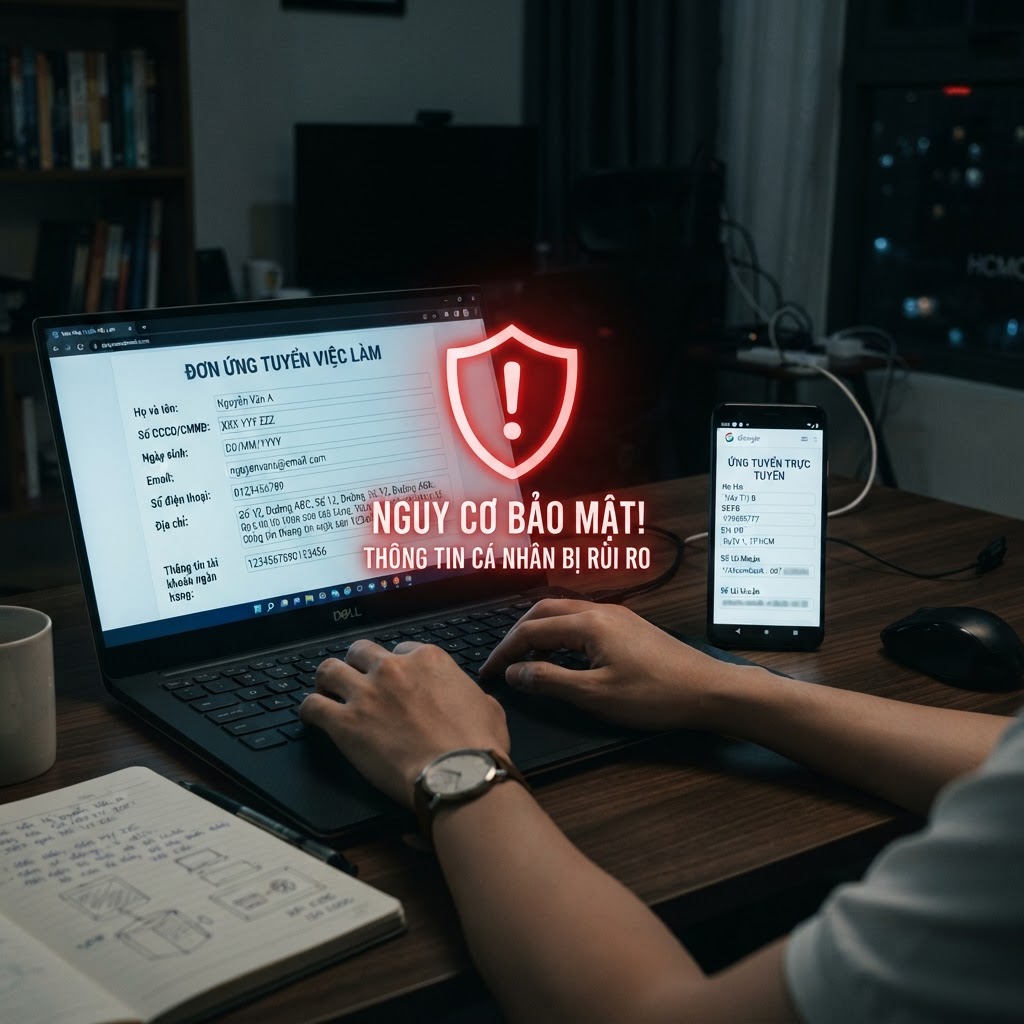
Your Căn cước công dân (CCCD) is your national identity card. Vietnamese authorities have specifically warned job seekers not to give passports, CCCDs, or other personal documents to strangers or unverified recruiters. Your identity documents can be used to open bank accounts, register SIM cards, take out loans, or commit crimes in your name.
Documents and information you must protect include:
- Căn cước công dân (CCCD) and any CCCD photographs
- Passport
- Driver's license
- Bank account information and bank app login credentials
- Tax information
- Personal photographs (especially selfies holding ID documents)
- Home address
- Date of birth
- SIM card and phone information
- Login credentials for any account
Never send a photograph of your CCCD, passport, or bank card to someone you have not independently verified as a legitimate employer. A real employer will not ask for these documents before you have attended a verified interview and received a legitimate written contract.
Do Not Sign What You Have Not Read
Never Sign a Document You Have Not Read and Understood
Vietnamese authorities have specifically highlighted the risk of job seekers being pressured into signing documents they do not understand. Never allow a recruiter or employer to pressure you into signing blank documents, unexplained agreements, or contracts you cannot read clearly.
If someone asks you to sign a blank page, a document they will not let you read, or an agreement they refuse to explain, walk away. A legitimate employer will give you time to read, understand, and if needed, seek advice before signing.
How to Verify Any Job in Vietnam: A 6-Step Verification Process

Step 1 — Find the Employer Independently
Do not rely only on the Facebook, Zalo, Telegram, or WhatsApp account that contacted you. Search for the employer yourself. Check for:
- Official website
- Official company contact information
- Company registration information where appropriate
- Official social-media accounts
- Physical address
- Company employees
- Official careers page
Step 2 — Verify the Job
Ask yourself: Can I find this exact position independently? Check the job title, salary, responsibilities, location, employer, recruiter, and application process. If the job exists only in a private message and cannot be found on the company's official website or a legitimate job board, that is a warning sign.
Step 3 — Verify the Recruiter
Ask: Does this person actually work for the company? Do not accept a Facebook profile, Zalo account, Telegram account, or LinkedIn profile as proof by itself. Contact the company through its official channels and ask whether this person is authorised to recruit on its behalf.
Step 4 — Verify the Company Through Independent Contact Information
Do not use the contact details supplied by a suspicious recruiter. Find the company yourself using its official website or official directory listing, and contact it directly. Ask: "Can you confirm that this person is recruiting for this position?"
Step 5 — Verify Salary and Working Conditions
Be suspicious if:
- Pay is far above the normal market rate for similar work
- The work requires almost no skills
- No experience is required for a high-paying role
- The company refuses to explain the duties clearly
- Working hours are unclear
- The location is unclear or keeps changing
- The contract is unclear or will not be provided in writing
Step 6 — Verify Any Request for Money
Be extremely cautious about any request for:
- Deposits or recruitment fees
- Training fees or equipment fees
- Travel deposits or visa fees
- "Security deposits" or "account activation" fees
- "Task deposits"
- Cryptocurrency transfers
- Money transfers to a personal account
Scammers may describe these payments as refundable. They rarely are.
Vietnam Payment Warning: Where Is the Money Going?
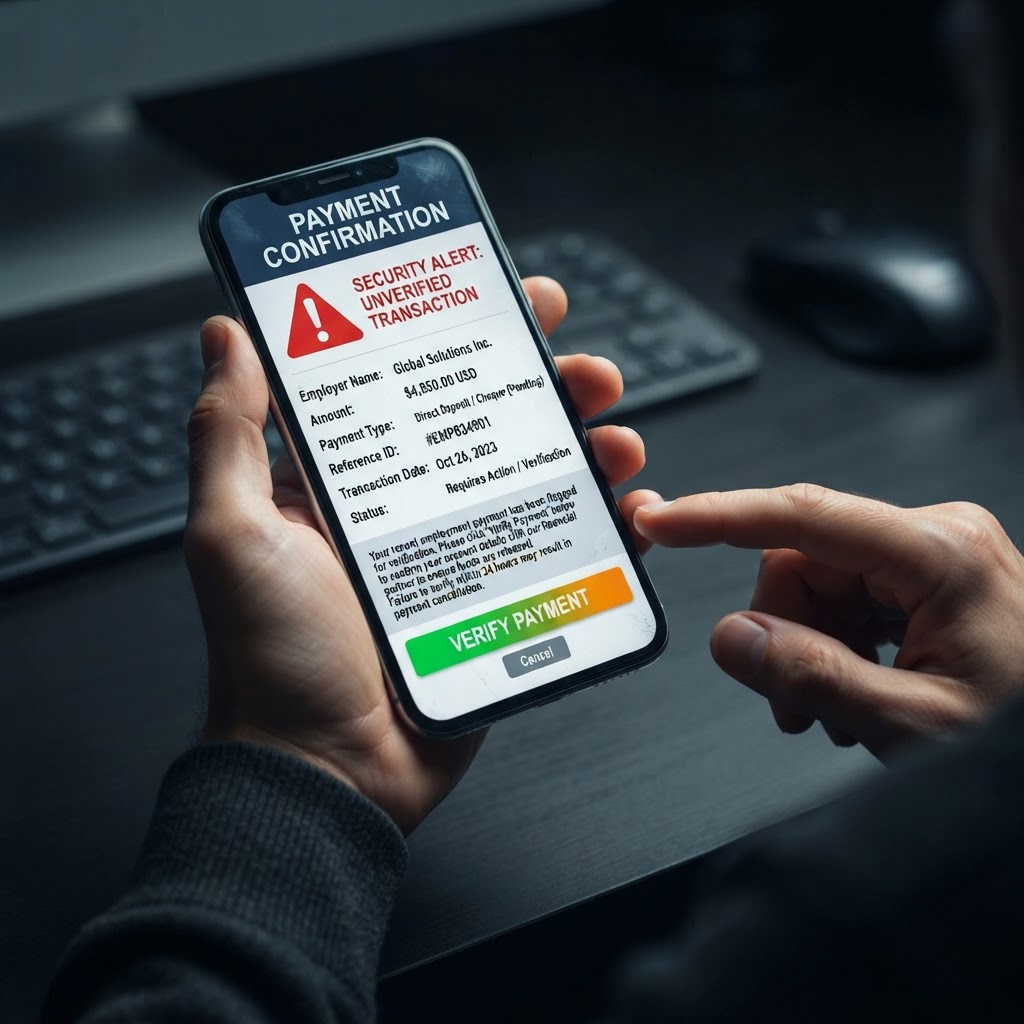
Vietnamese job seekers should be extremely cautious when asked to transfer money to:
- A personal bank account
- An account belonging to a different person, not the employer
- A cryptocurrency wallet
- A payment intermediary you have not independently verified
- An unknown company
- A recruiter personally
An account belonging to someone other than the supposed employer is an additional reason to stop and investigate. A legitimate company will use a corporate bank account in the company's name, not the personal account of a recruiter or a third party.
The 5-Minute Vietnam Job Check
Before accepting any online job in Vietnam, run through this checklist. If several answers raise concerns, stop and do not proceed until you verify the opportunity.
- Is the employer real?
- Can I find the employer independently?
- Can I find the exact job independently?
- Does the recruiter actually work there?
- Is the salary realistic?
- Is the job location clear?
- Is there a legitimate written contract?
- Have I independently verified the contract?
- Am I being asked to pay money?
- Am I being asked to send cryptocurrency?
- Am I being asked for my CCCD or passport too early?
- Am I being asked to travel somewhere without independently verifying the employer?
- Have I told my family or trusted person where I am going?
If several answers raise concerns: STOP. DO NOT PROCEED UNTIL YOU VERIFY THE OPPORTUNITY.
Vietnam Social Media Warning Signs
Recruitment through social media is common in Vietnam, and it is not inherently unsafe. However, you should treat social-media recruitment as a lead that needs verification, not as proof of employment. Warning signs include:
- The account is newly created
- The account has very few legitimate followers
- The profile uses stolen photographs
- The profile is generic, with no real personal or company information
- There is no verifiable company affiliation
- Comments are disabled on the post
- Comments are filled with suspicious praise from similar accounts
- The recruiter refuses phone or video verification
- The recruiter immediately moves the conversation to private messaging
- The recruiter uses multiple different phone numbers
- The recruiter changes the employer's name during the conversation
- The recruiter refuses to provide a physical office address
- The recruiter asks for money before explaining the job
- The recruiter asks for CCCD photographs immediately
Can a Legitimate Employer Contact You Through Zalo?
Yes. Using Zalo does not automatically mean a job offer is fraudulent. Zalo is a widely used communication tool in Vietnam, and legitimate recruiters may use it.
However, Zalo should not be treated as proof that the recruiter or job is legitimate. Verify the employer independently, not just the Zalo account. Independently confirm:
- The company
- The recruiter's employment
- The job itself
- The office location
- The salary
- The contract
- Payment arrangements
Facebook and TikTok Recruitment
Scammers can advertise jobs through Facebook groups, Facebook Marketplace, TikTok, Messenger, social-media pages, and employment groups. This does not mean these platforms are inherently unsafe. Many legitimate jobs are also posted there.
The key principle is: treat social-media recruitment as a lead that needs verification, not as proof of employment. A job post on TikTok is the beginning of your research, not the end of it.
Looking for Work Overseas? Verify Before You Travel

This is one of the most important sections in this article. Vietnamese authorities have warned about fraudulent recruitment schemes that promise easy, high-paying overseas work and may lead to illegal border crossings, forced labor, online scam operations, exploitation, or human trafficking.
Never travel overseas based solely on:
- A Facebook post
- A Zalo message
- A Telegram contact
- A WhatsApp message
- A friend-of-a-friend recommendation
- An unverified recruitment agent
Before traveling for overseas work, verify:
- The employer is a real, legal company
- The job exists and matches the offer
- The salary and contract are confirmed in writing
- The work location is known and verified
- You have the correct visa and work permit
- The recruitment agency is licensed and authorised
- Accommodation and transportation are confirmed
- You have shared emergency contacts with your family
For Vietnamese workers seeking overseas employment, use properly licensed and authorised recruitment channels. Verify the legal status of the employment arrangement through official government channels. Vietnamese authorities specifically advise people seeking overseas employment to use licensed businesses and avoid handing personal documents to strangers.
Critical Vietnam Safety Rule
Never travel to another province or another country for an online job unless you have independently verified the employer, job location, employment contract, transportation arrangements, and legal status of the work.
Tell a trusted family member where you are going, who you are meeting, the employer's name, the job location, and your expected schedule. Vietnamese police have specifically advised job seekers traveling for work to inform family members of their employer, location, contact information, and travel itinerary.
When a Fake Job Can Become a Human-Trafficking Risk
Some fraudulent employment offers are not simply attempts to steal money. They can be used to lure people into forced labor, exploitation, illegal overseas movement, online scam operations, confined workplaces, debt-based coercion, or human trafficking. Vietnamese authorities have documented cases where people were recruited online with promises of high-paying, easy work and subsequently became victims of exploitation or trafficking.
Destinations that have appeared in documented cases include Cambodia, Myanmar, China, Laos, and other locations in Southeast Asia. This does not mean that every job in these countries is fraudulent. Legitimate employment exists in all of these countries. The danger is when recruitment is unverified, travel is arranged secretly, and your documents are taken from you.
If someone wants you to travel secretly, cross a border illegally, surrender your passport or CCCD, hide your destination from your family, or refuses to provide a legitimate employment contract, do not go.
Tell Someone Where You Are Going
Before attending an unfamiliar interview or traveling for a job, tell a trusted person:
- Employer name
- Recruiter name and phone number
- Job location and office address
- Expected arrival time
- Expected return time
- Transportation details
Share copies of legitimate documents and contact information with someone you trust. If anything goes wrong, this person will know where to look for you and who to contact.
What to Do If You Are in Immediate Danger
If you or someone you know is being held against their will, threatened, forced to work, prevented from leaving, forced to surrender identification, or forced to participate in criminal activity, seek immediate help.
Emergency Contacts in Vietnam
If you are outside Vietnam and need emergency assistance, contact the nearest Vietnamese diplomatic or consular mission. Vietnam's Ministry of Public Security has specifically identified 111 and 113 as relevant reporting and help channels in trafficking-related situations.
Where Can I Report a Suspected Job Scam in Vietnam?
If you encounter a suspicious job offer or believe you have been targeted by a scam, you can report it to:
- Local police (dial 113 for emergencies)
- Relevant Vietnamese authorities
- The platform where the scam was advertised (Facebook, Zalo, TikTok, etc.)
- Your bank or payment provider if money was transferred
- Appropriate cybersecurity reporting channels
Reporting helps protect others. Even if you did not lose money, your report may prevent someone else from becoming a victim.
The STOP Method: A Simple Verification Framework
The Five-Point Verification Checklist
Before You Accept an Online Job in Vietnam: Safety Checklist
- Verify the Company
- Verify the Job
- Verify the Recruiter
- Protect Your CCCD
- Protect Your Bank Information
- Never Pay to Get Hired
- Tell Someone Where You Are Going
- Verify Before You Travel
Authoritative Vietnam Sources
This article is based on public warnings and guidance from Vietnamese government authorities, including:
- Ministry of Public Security (Bộ Công an) — mps.gov.vn
- Vietnamese cybersecurity and information-safety authorities — mic.gov.vn
These sources have issued warnings about online job scams, "việc nhẹ, lương cao" recruitment fraud, fake online tasks, fake recruitment, overseas employment scams, human trafficking, illegal border crossings, and personal-document protection. Always check the latest guidance on their official websites.
Frequently Asked Questions
How can I avoid online job scams in Vietnam?
You can avoid online job scams in Vietnam by verifying every employer independently, never paying money to get hired, protecting your CCCD and personal documents, refusing to sign documents you have not read, and telling a trusted person where you are going before any interview or travel. If an offer promises unusually high pay for easy work, treat it as a lead that needs verification, not as proof of employment.
What does "việc nhẹ, lương cao" mean?
"Việc nhẹ, lương cao" is a Vietnamese phrase meaning "easy work, high pay." It is commonly used in job advertisements that Vietnamese authorities have warned about as a frequent warning sign in recruitment scams.
Is every "việc nhẹ, lương cao" job a scam?
Not every high-paying job advertised with this phrase is automatically fraudulent. However, Vietnamese authorities have repeatedly warned about recruitment scams using promises of easy work and unusually high income. Verify the employer, job, contract, and payment arrangements before proceeding.
How can I verify a recruiter in Vietnam?
Do not accept a Facebook profile, Zalo account, Telegram account, or LinkedIn profile as proof by itself. Find the company's official website and contact information independently, then ask the company directly: "Can you confirm that this person is recruiting for this position?" A legitimate recruiter will not object to being verified through official company channels.
Can I trust job offers on Facebook?
Not automatically. Facebook is a common platform for both legitimate jobs and scams. Treat any job offer on Facebook as a lead that needs verification, not as proof of employment. Check whether the employer has an official website, official page, and verifiable company registration before proceeding.
Can I trust a job offer sent through Zalo?
Using Zalo does not automatically mean a job offer is fraudulent. Legitimate recruiters in Vietnam do use Zalo. However, Zalo should not be treated as proof that the recruiter or job is legitimate. Verify the employer independently, not just the Zalo account.
Should I give a recruiter my CCCD?
No, not to an unverified recruiter. Vietnamese authorities have specifically warned job seekers not to give passports, CCCDs (Căn cước công dân), or other personal documents to strangers or unverified recruiters. A legitimate employer will not ask for these documents before you have attended a verified interview and received a legitimate written contract.
Should I give a recruiter my bank account information?
No, not to an unverified recruiter. Your bank account information can be used for fraud. Never send bank details, bank app login credentials, or photographs of your bank card to someone you have not independently verified as a legitimate employer.
What is a task scam?
A task scam is a fraud where you are asked to complete simple online tasks, such as product rating, liking videos, or following accounts. The scam often begins with a small payment to build trust, then requires you to deposit money to unlock higher-tier tasks or withdraw your earnings. Once you deposit money, you typically cannot get it back.
What is a fake e-commerce job?
A fake e-commerce job is a scam where someone impersonates or falsely claims to recruit for a major e-commerce platform. They may ask you to complete online tasks such as product rating or order boosting, and eventually require you to deposit money. This does not mean the platform itself is conducting scams; it means scammers are impersonating it.
Why do job scammers ask for deposits?
Job scammers ask for deposits because the deposit itself is the scam. They may call it a security deposit, training fee, equipment fee, account activation, or task deposit, and may claim it is refundable. Once you pay, the scammer keeps the money and may ask for more. No legitimate employer requires you to pay money to get hired.
What should I do if a recruiter asks me to send cryptocurrency?
Stop immediately. Cryptocurrency transfers cannot be reversed and are extremely difficult to trace. No legitimate employer asks job seekers to send cryptocurrency. If a recruiter asks for cryptocurrency, treat it as a strong sign of fraud and do not proceed.
How can I verify an overseas job?
Verify the employer is a real, legal company. Confirm the job, salary, and contract in writing. Check that you have the correct visa and work permit. Confirm the recruitment agency is licensed and authorised. Verify accommodation and transportation. Share your travel itinerary and emergency contacts with your family. Use only properly licensed recruitment channels for overseas employment.
What should I do before traveling for a job?
Before traveling, independently verify the employer, job location, employment contract, transportation arrangements, and legal status of the work. Tell a trusted family member where you are going, who you are meeting, the employer's name, the job location, and your expected schedule. Never travel based solely on a message from Facebook, Zalo, Telegram, or WhatsApp.
What should I do if someone asks me to cross a border illegally for work?
Do not go. Illegal border crossings can lead to arrest, forced labor, exploitation, or human trafficking. Vietnamese authorities have warned about fraudulent recruitment schemes that promise easy overseas work and may lead to illegal border crossings and forced labor. Only travel for work through legal, licensed channels with proper documentation.
What should I do if I think a job is connected to human trafficking?
Seek immediate help. In Vietnam, call the police emergency line at 113 or the national anti-trafficking hotline at 111. If you are outside Vietnam, contact the nearest Vietnamese diplomatic or consular mission. If someone is being held against their will, threatened, or forced to work, this is an emergency.
What should I do if I already sent money to a scammer?
Contact your bank or payment provider immediately and report the transaction as fraudulent. Report the scam to local police and to the platform where the scam was advertised. Act quickly, as there may be a limited window to stop or reverse the transfer. Do not send any more money, even if the scammer promises to return what you already sent.
What should I do if I gave a scammer my CCCD information?
Report it to local police immediately. Contact your bank to alert them that your identity may have been compromised. Monitor your accounts for unusual activity. If your CCCD or passport was physically taken, report it as stolen. The sooner you report it, the more can be done to protect your identity.
Can legitimate employers recruit through Zalo?
Yes. Using Zalo does not automatically mean a job offer is fraudulent. Zalo is a widely used communication tool in Vietnam, and legitimate recruiters may use it. However, you should verify the employer independently, not just the Zalo account. Confirm the company, recruiter, job, office, salary, contract, and payment arrangements through official channels.
Can AI be used to create fake job offers?
Yes. Scammers can use AI to generate convincing job descriptions, professional-looking messages, fake company websites, and even fake video calls. This makes independent verification even more important. Do not trust a message, image, or video just because it looks professional. Always verify the employer through official channels you found yourself.
Looking for Work Should Not Mean Putting Your Money, Identity, or Safety at Risk
Verify the company. Verify the job. Verify the recruiter. Protect your information. Never pay simply to get hired. And if a job requires you to travel, verify everything before you go.
Five minutes of verification can protect you from months, or years, of financial and personal consequences.
Share this article with Vietnamese friends, family members, students, freelancers, remote workers, and anyone you know who is looking for work online. The more people who know how to verify a job offer, the fewer people scammers can harm.